

Summary:
- The European Union has proposed banning transactions on 11 crypto platforms as part of its 21st sanctions package against Russia.
- The measures are aimed at entities accused of helping Russia bypass existing financial restrictions related to the war in Ukraine.
- EU officials have not yet publicly identified the 11 platforms targeted under the proposal.
- The package also includes additional sanctions against banks, oil traders, refineries, weapons manufacturers, and entities operating outside Russia.
- The move follows recent UK sanctions against HTX-linked entities over alleged connections to Russia-related financial networks.
- The proposal highlights growing regulatory attention on the role crypto infrastructure may play in sanctions enforcement and compliance.
The European Union is preparing one of its most direct actions against the cryptocurrency sector since the start of the Russia-Ukraine conflict, proposing a ban on transactions involving 11 crypto platforms as part of a broader sanctions package aimed at increasing pressure on Moscow. The proposed measures form part of the European Union's 21st sanctions package against Russia and would expand restrictions beyond traditional financial institutions and energy-related businesses to include digital asset platforms that regulators believe may have helped sanctioned entities operate despite existing controls. The announcement was made by Kaja Kallas, Vice President of the European Commission and the EU's High Representative for Foreign Affairs and Security Policy, who outlined a series of measures targeting Russia's financial infrastructure and the networks that support it. In a statement published on X, Kallas said:
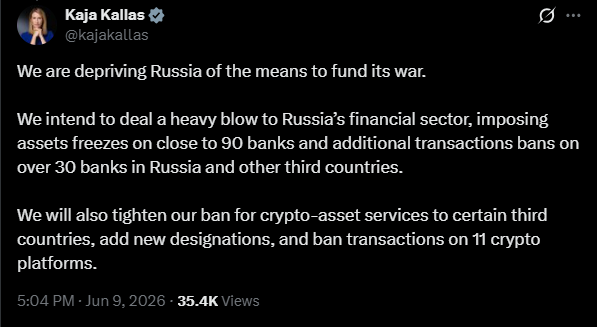
The proposal signals that European policymakers increasingly view cryptocurrency infrastructure as an area requiring closer scrutiny within the broader sanctions framework. While traditional sanctions have historically focused on banks, payment providers, and state-controlled enterprises, regulators have become increasingly concerned that digital assets may be used to facilitate cross-border transfers outside conventional financial channels. At this stage, the proposal has not identified the specific crypto platforms that would be affected. The European Commission has not released a public list, and requests for clarification have so far gone unanswered.That uncertainty has already sparked discussion across the digital asset industry, with market participants closely watching for further details about which companies may be included and how the restrictions could be enforced if approved.
Financial Networks and Sanctions Enforcement Move Into Focus
The proposed crypto restrictions are part of a much wider package designed to increase economic pressure on Russia and entities accused of helping Moscow circumvent previous sanctions. European Commission President Ursula von der Leyen outlined the broader scope of the package in a statement accompanying the proposal. According to von der Leyen, the measures target sectors that European policymakers believe remain critical to Russia's economic resilience, including energy, trade, financial services, and digital assets. She said:
The package reportedly includes sanctions against 31 additional Russian banks as well as 20 entities located in third countries. Those targets include banks, oil traders, and crypto-related businesses that European authorities believe may have provided services to sanctioned individuals or organizations. The inclusion of cryptocurrency platforms reflects a broader trend among regulators worldwide. Over the past several years, governments have increasingly focused on how digital assets intersect with sanctions compliance. While blockchain transactions are publicly visible, authorities have argued that certain platforms, mixers, and cross-border payment services can create additional challenges when tracing funds connected to sanctioned actors. Supporters of stricter oversight argue that sanctions are only effective if governments can prevent restricted entities from accessing alternative financial networks. Critics, however, warn that broad restrictions risk affecting legitimate users and could create unintended consequences for compliance efforts.
UK Action Against HTX Adds Context to Broader Crackdown
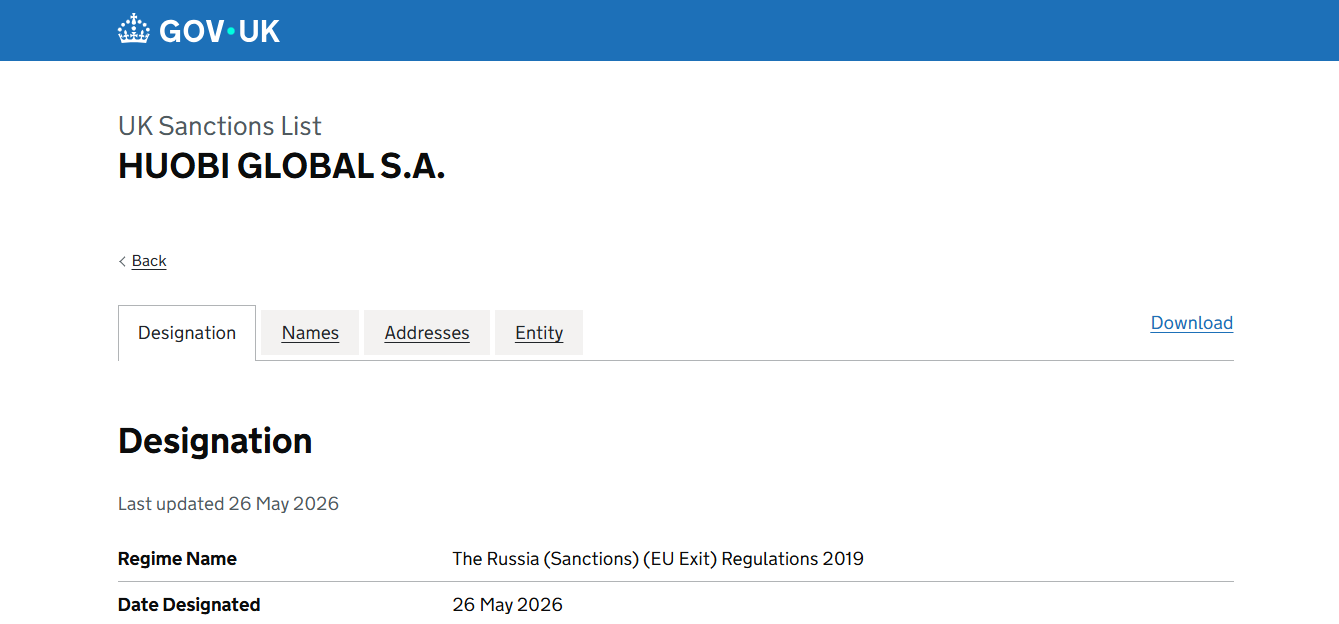
The European proposal follows a similar move by the United Kingdom earlier this year, highlighting growing coordination among Western governments regarding crypto-related sanctions enforcement. On May 26, UK authorities imposed sanctions on Huobi Global S.A., the Panamanian company associated with the HTX exchange, citing alleged links to Russia-related financial networks. According to UK authorities, there were reasonable grounds to suspect that the sanctioned entity had provided support to the Russian government through financial services connected to A7 Limited Liability Company and Garantex, both of which had previously been sanctioned. HTX rejected those allegations and stated that the sanctioned company is separate from the online exchange used by customers globally. The case nevertheless drew significant attention because it illustrated the increasing willingness of regulators to scrutinize cryptocurrency infrastructure in the context of sanctions enforcement.
Additional analysis published by blockchain intelligence firm Global Ledger added another layer to the discussion. According to the report, HTX processed approximately $21.06 billion in high-risk cryptocurrency flows between 2021 and May 2026. The report estimated that at least $7.64 billion of that activity was connected to Russian high-risk entities and darknet marketplaces, including Garantex, Grinex, A7A5, and Hydra. The findings intensified debate over how exchanges should manage exposure to potentially sanctioned funds and what level of responsibility platforms should bear for monitoring user activity. At the same time, several blockchain researchers criticized the UK's approach, arguing that exchange-level sanctions can create challenges for investigators and compliance teams. Some researchers warned that broadly labeling entire platforms as high risk may lead to unnecessary restrictions on legitimate users while reducing the effectiveness of blockchain analytics tools that rely on transaction tracing and risk segmentation. Those concerns are likely to resurface if the European Union proceeds with its proposed crypto platform restrictions. For now, the identities of the 11 targeted platforms remain unknown. What is clear, however, is that crypto has become a more prominent part of the sanctions conversation than ever before. The European Union's latest proposal shows that regulators increasingly view digital asset infrastructure as an important component of global financial networks. As sanctions frameworks continue to evolve, crypto platforms may find themselves facing greater scrutiny alongside banks, payment providers, and traditional financial institutions.
READ MORE: Iran War and AI Spending Could Push Bitcoin to $126K in 2026, Says Arthur Hayes