

Summary:
- Former FTX CEO Sam Bankman-Fried has formally applied for a presidential pardon from U.S. President Donald Trump.
- The application appears on the U.S. Department of Justice Office of the Pardon Attorney's list of pending clemency requests.
- Bankman-Fried is continuing to appeal his 2023 conviction and 25-year prison sentence.
- The pardon request comes after previous efforts to secure a new trial were rejected by the court.
- Trump previously said in a January interview that he did not plan to pardon Bankman-Fried.
- The latest move adds another layer to one of the most closely watched legal battles in crypto history.
Former FTX CEO Sam Bankman-Fried has opened a new chapter in his legal fight by formally applying for a presidential pardon from U.S. President Donald Trump, while continuing to challenge the fraud conviction that sent him to prison following the collapse of the cryptocurrency exchange. The filing appeared on the U.S. Department of Justice Office of the Pardon Attorney website, where it is listed among pending clemency requests as of June 1. The application is categorized as a "pardon after completion of sentence," marking the latest attempt by Bankman-Fried to overturn or reduce the consequences of one of the largest financial scandals in the history of the digital asset industry. The move arrives nearly four years after the collapse of FTX shook global crypto markets, erased billions of dollars in customer funds, and triggered a wave of regulatory scrutiny that continues to shape the industry today.
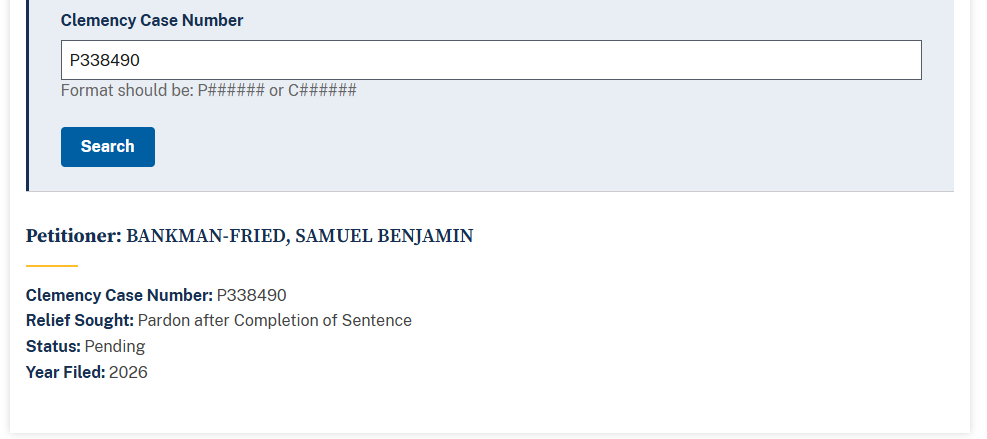
Although the pardon request has attracted significant attention, it does not replace Bankman-Fried's ongoing appeal. Instead, it creates another legal avenue as he seeks relief from the 25-year prison sentence imposed after his conviction.
A Conviction That Reshaped the Crypto Industry
Bankman-Fried was convicted in November 2023 on seven criminal counts, including fraud, conspiracy, and money laundering, following a high-profile federal trial in New York. Prosecutors argued that he orchestrated the misuse of customer funds deposited on FTX and directed billions of dollars toward Alameda Research, the trading firm closely connected to the exchange. The government's case portrayed the relationship between FTX and Alameda as a central factor behind the exchange's collapse in late 2022. The downfall of FTX remains one of the defining events in cryptocurrency history. At its peak, the exchange was among the largest digital asset trading platforms in the world and was widely viewed as one of the industry's most influential companies.
When questions emerged regarding Alameda's financial health and the backing of customer deposits, confidence quickly evaporated. The resulting liquidity crisis led to a rapid collapse that left customers unable to access their funds and sent shockwaves through the broader market. Federal prosecutors ultimately secured convictions on all major charges presented to the jury. Despite the verdict, Bankman-Fried has consistently maintained that he did not intentionally commit fraud and has continued pursuing multiple legal strategies aimed at challenging the outcome. One of those efforts involved a motion seeking a new trial based on what his legal team described as newly available witness testimony. Attorneys argued that additional evidence could undermine important aspects of the government's case. However, that request was denied by Judge Lewis Kaplan, the same federal judge who presided over the original trial. With that avenue closed, the appeal process remains active, and the pardon request now adds another front to an already complex legal battle.
READ MORE: Fake Google Ads Targeting Uniswap Users Steal $400K, Analysts Warn
The Trump Pardon Angle and a Changing Public Strategy
The timing of the pardon application has drawn attention partly because of Bankman-Fried's recent public comments. In recent months, observers have noted that several of his social media posts appeared increasingly aligned with themes often associated with President Trump and his administration. Some of those posts referenced financial markets, including commentary highlighting continued gains in the S&P 500 during Trump's second term. Whether those messages were connected to a broader public-relations strategy remains unclear. But for now, the former FTX executive is now formally seeking clemency from the White House. The challenge for Bankman-Fried is that Trump has already publicly addressed the possibility. During a January interview with The New York Times, Trump was asked directly whether he would consider pardoning the former crypto executive. His response was brief:
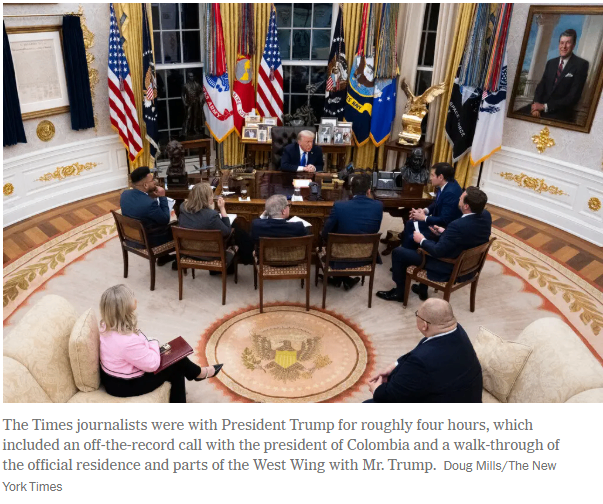
While presidential positions can change over time, the statement suggests that Bankman-Fried faces a difficult path if he hopes to secure executive clemency. Presidential pardons remain one of the most powerful tools available within the U.S. justice system, allowing a president to forgive federal offenses or reduce legal penalties. However, applications are reviewed through a lengthy process, and approval is never guaranteed. For now, the filing simply places Bankman-Fried among the list of individuals seeking consideration. The request also arrives as public debate continues over accountability in major financial fraud cases. Critics of a potential pardon argue that the scale of losses suffered by FTX customers makes clemency inappropriate. Supporters of further review point to ongoing appeals and disputes surrounding aspects of the trial. No indication has been given that the White House intends to revisit Trump's earlier position.
The Wider FTX Fallout Continues Years Later
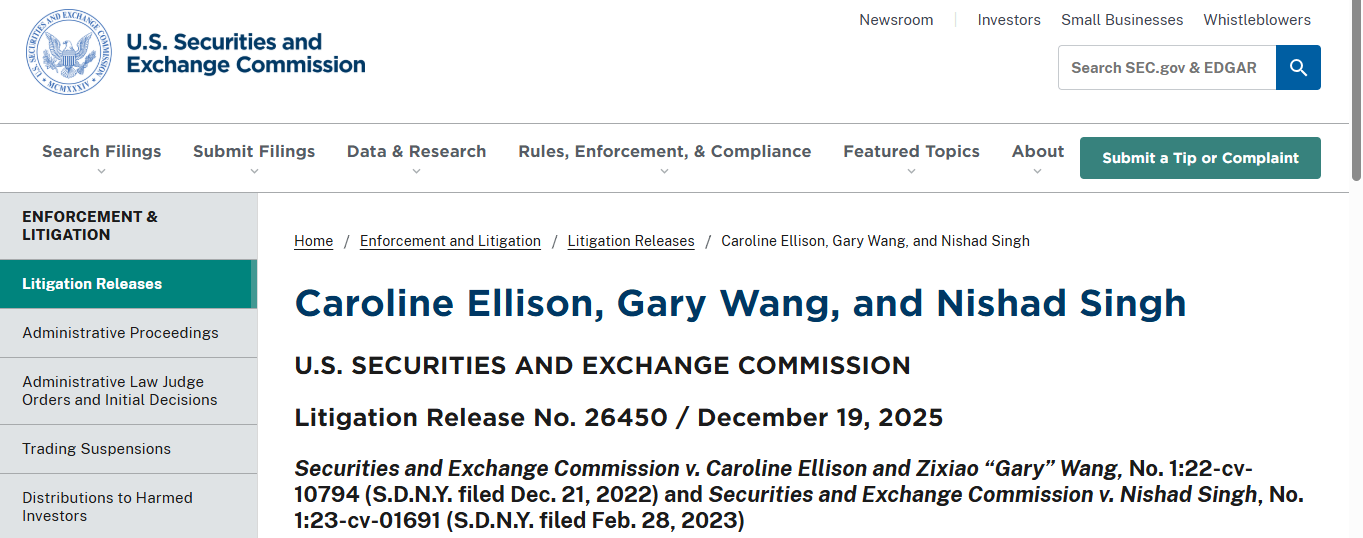
The pardon request is also a reminder that the consequences of the FTX collapse continue to unfold long after the company's bankruptcy. Several former executives tied to the exchange and Alameda Research have already received sentences after cooperating with authorities or entering guilty pleas. Ryan Salame, who previously worked at Alameda Research before becoming co-CEO of FTX Digital Markets in the Bahamas, received a 90-month prison sentence after pleading guilty to conspiracy charges related to unlawful political contributions and operating an unlicensed money-transmitting business. Meanwhile, former Alameda Research CEO Caroline Ellison became one of the government's most important witnesses during the case against Bankman-Fried. Her cooperation played a major role in the prosecution's presentation, and federal prosecutors credited her assistance when recommending a lighter sentence. Ellison ultimately received a two-year prison term, significantly less than penalties sought for other executives connected to the collapse. She was released in January. Following her release, the U.S. Securities and Exchange Commission imposed a ten-year ban preventing her from serving in executive roles at publicly traded companies or digital asset exchanges.
The broader crypto industry has spent much of the period since FTX's collapse attempting to rebuild trust with regulators, investors, and customers. Exchanges have increased transparency efforts, proof-of-reserve initiatives have become more common, and lawmakers across multiple jurisdictions have accelerated work on digital asset regulations. Against that backdrop, Bankman-Fried's pardon request is unlikely to close the chapter on the FTX saga. For now, the former FTX CEO remains focused on two parallel objectives: overturning his conviction through the courts and pursuing clemency through the political process. Whether either path succeeds remains uncertain, but the filing ensures that one of crypto's most consequential legal battles is far from over.
READ MORE: US Seized Nearly $1 Billion in Iranian Crypto, Treasury Secretary Says