

Summary:
- The new cyber strategy from the administration of Donald Trump includes support for the security of cryptocurrencies and blockchain technologies.
- The document places blockchain alongside strategic technologies such as artificial intelligence and quantum computing.
- The strategy outlines broader plans to strengthen U.S. leadership in emerging technologies while protecting digital infrastructure.
- Industry voices noted that the plan also signals growing attention to quantum computing risks that could affect cryptographic systems used in crypto networks.
The latest cyber strategy released by the administration of Donald Trump formally places cryptocurrencies and blockchain technology within the broader framework of U.S. national technology priorities. The policy document, titled President Trump's Cyber Strategy for America, outlines how the government intends to strengthen its cyber defenses while maintaining leadership in critical technologies that are shaping the global digital economy. Among the areas highlighted are artificial intelligence, quantum computing, and blockchain systems. Within a section focused on maintaining technological leadership, the document specifically notes that the United States will support the security of crypto networks and blockchain infrastructure as part of broader efforts to secure emerging digital systems. The strategy states:
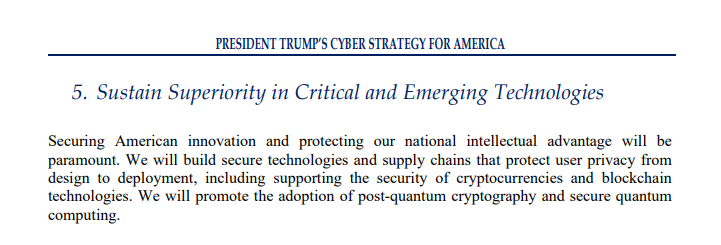
While the statement itself is brief, its inclusion signals that blockchain infrastructure is now being viewed through the same strategic lens as other foundational technologies. So, that means digital assets and blockchain networks are increasingly seen as components of the broader technological competition between global powers. This move reflects how quickly crypto infrastructure has expanded beyond trading and speculation. Blockchain systems are now used for payments, digital identity, supply chains and financial settlement. Governments therefore face growing pressure to ensure these systems remain secure. The cyber strategy's focus on blockchain security fits within the document's wider structure, which is built around six major policy pillars designed to strengthen national cyber capabilities and protect critical infrastructure.
U.S. Leadership in Emerging Technologies
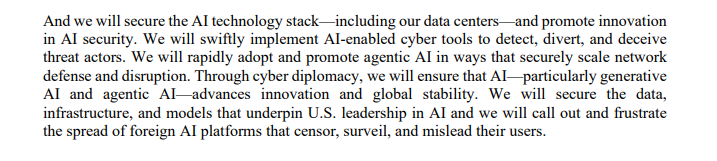
The new strategy places blockchain security alongside technologies that already dominate national security discussions, including artificial intelligence and quantum computing. Another section of the document describes how the U.S. government plans to deploy new defensive tools built around AI-driven cyber capabilities. These systems are intended to identify cyber threats faster and protect sensitive networks. The document explains:
"And we will secure the AI technology stack-including our data centers-and promote innovation in AI security. We will swiftly implement AI-enabled cyber tools to detect, divert, and deceive threat actors. We will rapidly adopt and promote agentic AI in ways that securely scale network defense and disruption....we will ensure that AI-particularly generative AI and agentic AI-advances innovation and global stability."
The policy also aligns with broader political messaging from the Trump administration around cryptocurrency. During the past year, officials have repeatedly emphasized a goal of strengthening the United States' role in the global digital asset economy. That messaging has included pledges to make the country a major hub for crypto development, as well as proposals such as the creation of a strategic Bitcoin reserve and new legislation focused on stablecoins. One such initiative, known as the GENIUS Act, aims to provide clearer regulatory frameworks for digital asset markets.
Alongside those policy proposals, several enforcement actions against major crypto firms launched during earlier regulatory periods have been dropped or settled. Cases involving companies such as Coinbase, Binance, Uniswap Labs and projects linked to Justin Sun have seen shifts in direction under the current regulatory approach. Taken together, these developments suggest that the administration is trying to reposition the U.S. as a supportive environment for crypto innovation while still focusing on infrastructure security.
Quantum Computing Concerns Enter the Crypto Conversation
One part of the strategy that caught the attention of crypto analysts is its emphasis on post-quantum cryptography. Most blockchain networks rely on cryptographic systems that are secure against today's computers. However, researchers have long warned that sufficiently powerful quantum computers could eventually break certain forms of encryption used in digital signatures and wallet security. The cyber strategy's reference to post-quantum cryptography signals that policymakers are beginning to take that possibility more seriously.
The discussion quickly reached social media, where industry observers reacted, among them was Castle Island Ventures founder Nic Carter, who has previously discussed the long-term risks quantum computing could pose to digital asset security. He commented on X after the strategy was published:
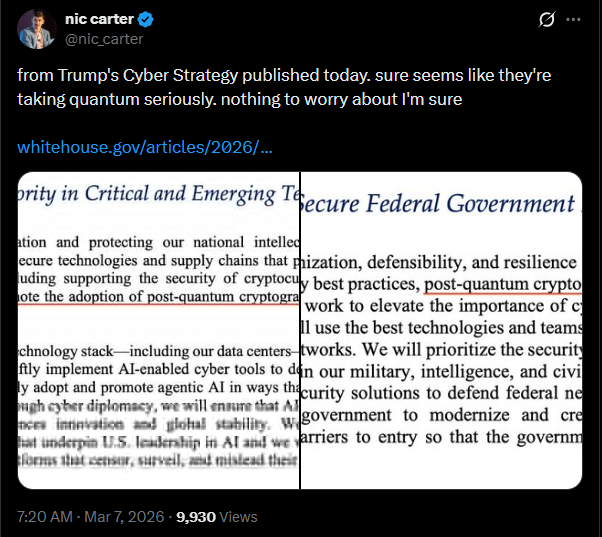
Researchers have been exploring quantum-resistant cryptographic systems that could protect blockchain networks decades into the future. For now, most experts believe that practical quantum threats to Bitcoin and other blockchains remain years away. But the inclusion of post-quantum security in national policy documents suggests that governments are preparing for long-term technological moves that could reshape digital infrastructure.
Crypto Moves Further Into the Policy Mainstream
The cyber strategy marks another moment where cryptocurrency technology intersects with national policy planning. Just a few years ago, blockchain discussions inside government circles were often limited to regulatory debates or concerns about financial risk. Today the conversation looks very different. Distributed networks are increasingly treated as part of the global digital infrastructure landscape, alongside cloud computing, artificial intelligence and next-generation communications systems.
By referencing cryptocurrencies directly within its cyber strategy, the administration signals that blockchain security now forms part of the broader effort to maintain technological leadership. Digital assets and blockchain systems are becoming part of the core technology strategy shaping how governments think about security, innovation and global competition in the digital age.
READ MORE: KuCoin Faces Regulatory Action in Dubai Over Licensing Issues, Warns Investors of Risks