

Summary:
- BlockDAG has drawn massive attention with claims of over $450 million raised during its presale, one of the largest fundraising campaigns in recent crypto history.
- Despite announcing that the presale ended, token sales appear to continue through an "AfterSale" or swap phase, with inconsistent pricing.
- The project has repeatedly postponed its launch milestones, first targeting mid-2025 before shifting to later dates without delivering a working mainnet.
- Critics and investigators, including well-known crypto sleuth ZachXBT, have raised concerns about the project's leadership structure, marketing tactics, and fundraising practices.
- User reviews and community discussions show growing skepticism, with many investors warning others to approach the project cautiously.
- BlockDAG presents itself as a legitimate Layer-1 blockchain project, numerous unresolved red flags remain, leaving investors divided on whether it is a promising technology or a high-risk venture.
Over the past year, BlockDAG has become one of the most widely discussed crypto presale projects on social media and investor forums. Promoted as a Layer-1 blockchain combining Proof-of-Work mining with Directed Acyclic Graph (DAG) architecture, the project claims it can deliver high scalability while maintaining decentralization. Its marketing campaign has been relentless. Sponsorship announcements, influencer promotions, and constant tier3 exchange listing updates across social media platforms have helped the project gain visibility among retail investors.
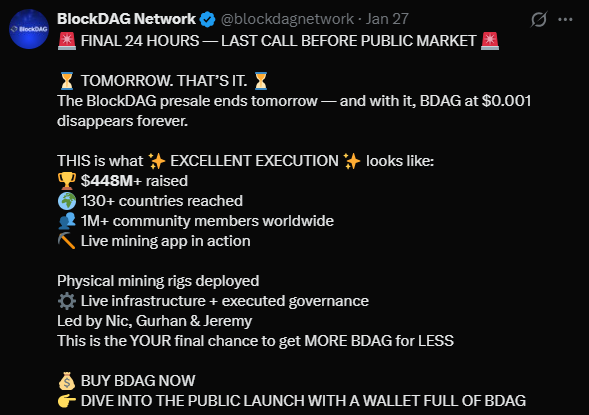
According to the team's recent own statements , the token presale has raised more than $448 million, and some figures circulated online claim the total amount raised may exceed $452 million. That level of funding would place BlockDAG among the largest presale fundraising campaigns in the history of cryptocurrency. Yet despite this enormous inflow of capital, many basic questions remain unanswered. The project has not fully launched its mainnet, also the timeline for its development has shifted several times and mostly BlockDAG’s structure of its presale campaign.
During a review conducted by the CotiNews investigative team, these inconsistencies began to form a pattern that has left investors divided. Some still believe BlockDAG represents a promising new blockchain ecosystem. Others worry it could be another example of the crypto industry's long history of overhyped presales that never deliver a functioning product and biggest scam in history.
The Presale That Wouldn't End
One of the most common concerns surrounding BlockDAG is the length and structure of its presale campaign. The project has remained in presale for an unusually long period. Early promotional material suggested that key milestones-including a token launch-would arrive by June 2025. When that deadline passed, the timeline shifted to August 2025, followed by new targets in early 2026. Each time the deadline approached, investors were told the presale was nearing its final stage. Eventually, the project announced that the presale had officially ended on February 2, 2026. However, token sales did not stop. Instead, BlockDAG introduced what it calls an "AfterSale" phase, allowing investors to continue purchasing tokens through a swap system. This raised new concerns about transparency, particularly because the price of the token during these phases has appeared inconsistent. A promotional post circulating on social media captured this ongoing fundraising push:
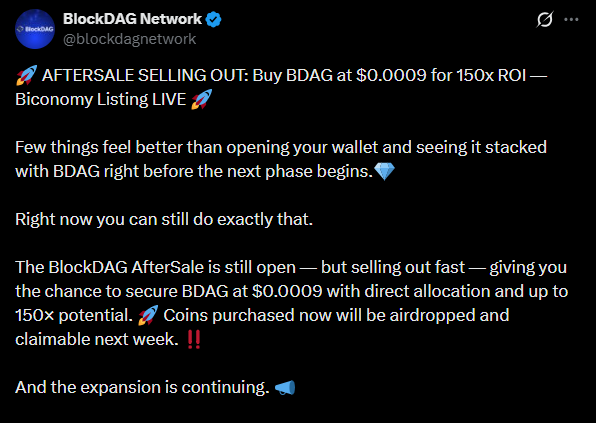
This kind of marketing language has sparked debate within the crypto community. Critics argue that repeatedly extending sales while advertising them as "last chances" may create unnecessary pressure on retail investors to buy quickly. Supporters, however, say extended fundraising phases are not uncommon in early-stage crypto projects, especially when teams are still building infrastructure. Regardless of interpretation, the pattern has contributed to growing skepticism among analysts watching the project.
READ MORE: SEC Drops Case Against Justin Sun After $10M Settlement, Closing Three-Year Crypto Lawsuit
Tokenomics and Supply Structure
BlockDAG's token, BDAG, has a total supply of 150 billion coins, divided into several allocations. Half of the supply-75 billion tokens-is reserved for miners. Another 50 billion tokens, representing roughly one-third of the total supply, were allocated to the presale. The remaining tokens are distributed between community initiatives, liquidity pools, and the development team.
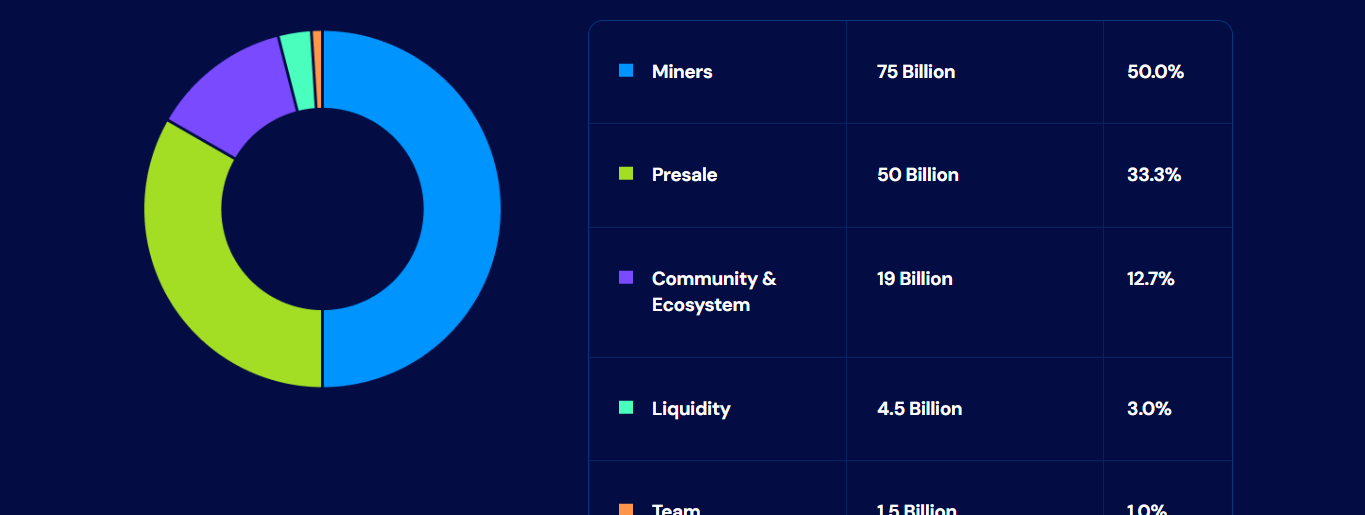
According to official figures, the distribution looks like this:
- Miners: 75 billion (50%)
- Presale: 50 billion (33.3%)
- Community and ecosystem: 19 billion (12.7%)
- Liquidity: 4.5 billion (3%)
- Team: 1.5 billion (1%)
At first glance, these numbers resemble token allocation models used by many other blockchain networks. However, critics argue that the large presale allocation combined with the prolonged fundraising period creates uncertainty about how much supply will ultimately enter circulation. Another unresolved issue is that the token is still not actively trading on major exchanges, despite the project's claims of raising hundreds of millions of dollars.
Leadership Transparency and Founder Controversy
BlockDAG publicly presents itself as a project led by an experienced team. The company lists Antony Turner as its CEO, describing him as a fintech entrepreneur who previously co-founded Switzerland's first equally weighted crypto index fund. The project's technical leadership includes Jeremy Harkness as CTO and Prof. Dr. Eng. Youssef Khaoulaj as Chief Security Officer, responsible for overseeing smart contract audits. On paper, the leadership structure appears credible. However, several investigators have raised questions about whether the publicly visible leadership truly represents the project's founding team.
29 Oct 2025, These concerns intensified after crypto investigator ZachXBT published a series of posts examining BlockDAG's origins. According to the analyst, the individual presented as the project's CEO may not actually be its founder. ZachXBT claimed that BlockDAG's supposed CEO was merely a paid frontman for Gurhan Kiziloz, a British entrepreneur previously linked to failed fintech and crypto ventures.
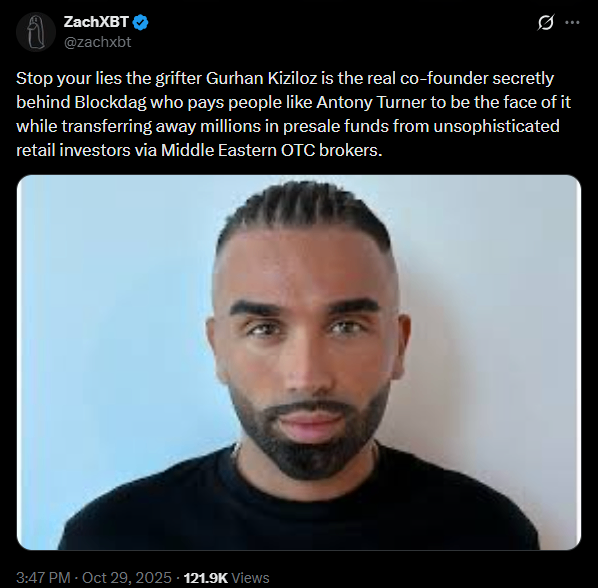
While these claims remain disputed and unproven, they quickly spread across crypto communities and added to the project's growing controversy. Another unusual detail is the timeline of the leadership team itself. BlockDAG initially launched without publicly revealing its core team members. Only in July 2024, more than a year after development reportedly began, did the project formally introduce its leadership. According to available information, Turner began working on BlockDAG in June 2023, while the other key executives joined later. The Chief Security Officer and advisor reportedly joined in May 2024, while the Chief Technology Officer joined as late as October 2024. This sequence has raised an important question that who was responsible for the project's early development and whitepaper before these executives joined.
ZachXBT Directly Claimed “BlockDAG Network is fake project”
In a post addressing an exchange listing announcement, the investigator warned investors about what he believes could be a large-scale presale scheme.
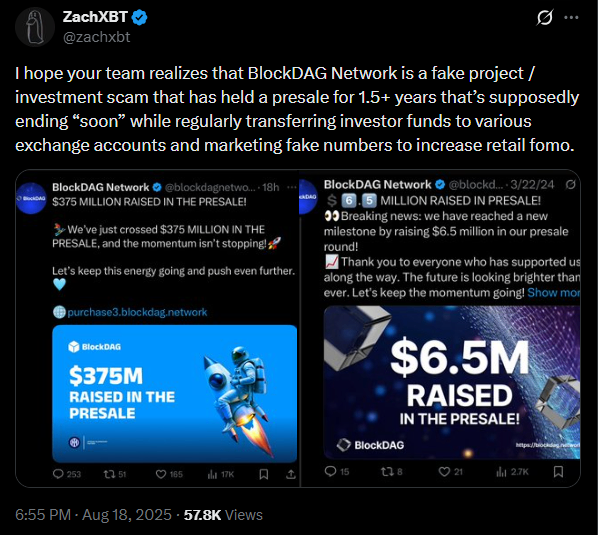
The statement quickly circulated across crypto social media, adding pressure on the BlockDAG team to address the accusations. But As of now, the project has not publicly provided a detailed response to every claim raised by investigators.
Whitepaper Similarities With Kaspa
Another concern emerged from online discussions comparing BlockDAG's whitepaper to that of Kaspa, another DAG-based blockchain network. The issue first surfaced on Reddit, where a user claimed that parts of BlockDAG's documentation looked strikingly similar to Kaspa's original whitepaper. Because both projects are based on Directed Acyclic Graph technology, some overlap in terminology and design concepts is expected. However, further examination revealed sections where the wording, formulas, and structure appeared unusually close. In some cases, screenshots circulating online suggested that portions of BlockDAG's documentation might mirror text from the Kaspa whitepaper.
It is impossible to definitively determine whether these similarities represent plagiarism or simply the use of shared technical references. No official partnership or collaboration between the two projects has been announced. Still, the resemblance has fueled speculation about whether BlockDAG's research and development work is entirely original.
Community Complaints and Negative Reviews
Beyond the marketing campaigns and presale numbers, another side of the story emerges when looking at user feedback. Over time, a growing number of investors have shared complaints about their experiences with BlockDAG, raising questions about how the project is handling its community and token distribution. User reviews posted on Trustpilot offer an early indication of the frustration. Before the rating was removed due to guideline breaches, BlockDAG held an average score of 2.8 out of 5. The platform also reported detecting and removing fake reviews linked to the project. According to the page that remains online today, roughly 71% of the reviews are negative, with many users warning others to approach the project carefully.
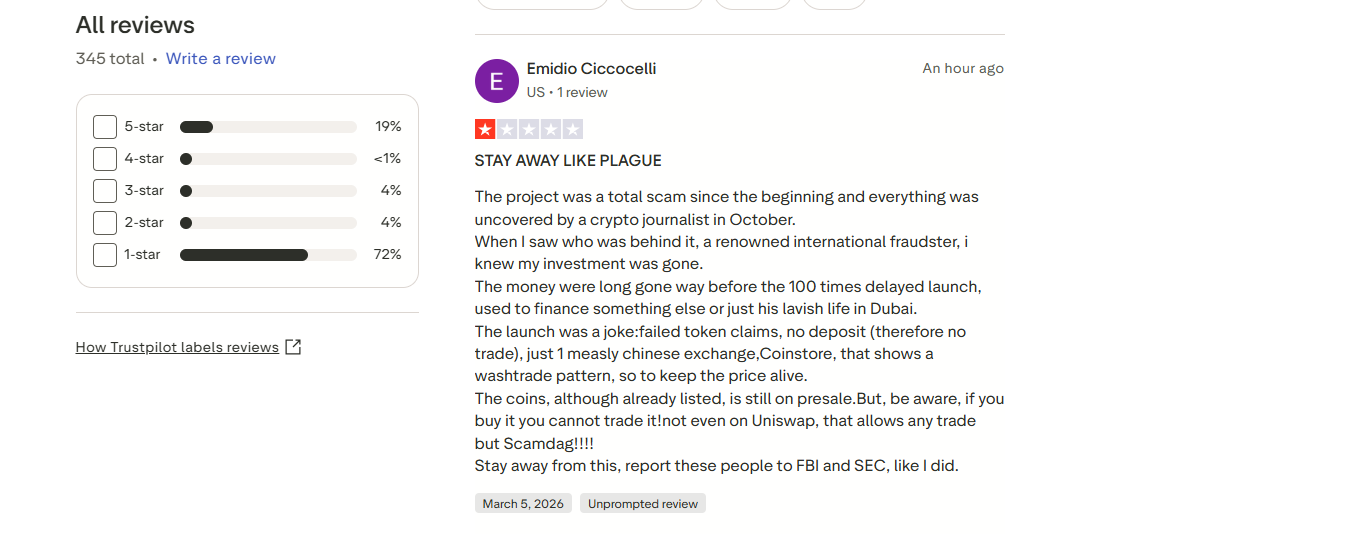
Some investors say they faced repeated delays, unclear communication from the team, and changes in presale conditions. Others claim they encountered issues related to token distribution and withdrawals. While a small number of positive reviews still exist - mostly praising the presale structure or support responses - they appear significantly outnumbered by critical feedback.
During our own investigation, the COTINews team also reviewed discussions inside the project's Telegram community, where thousands of members actively share updates and questions. Within those conversations, we found numerous reports from users describing problems such as missing tokens, claim errors, failed transactions, and cases where wallets show tokens as already claimed even though investors say they never received them. Several community members expressed frustration about these issues continuing for weeks without clear explanations. In many discussions, users repeatedly asked moderators for help regarding token claims or airdrop problems, while others warned new investors to be cautious until the situation becomes clearer.
Over time, this has created visible tension inside the community. Many early supporters still believe the project will eventually deliver on its promises, but a growing number of participants say the lack of clear answers and ongoing technical issues have left them increasingly frustrated.
Our Conclusion
After reviewing available information, the CotiNews investigative team found that BlockDAG presents a complicated and uncertain picture. The project has undeniably attracted massive attention and funding, something that rarely happens without at least some level of genuine interest from the crypto community.However, the long presale period, shifting deadlines, unresolved leadership questions, marketing tactics, and critical user reviews collectively create a risk profile that cannot be ignored.
It is important to emphasize that there is currently no definitive proof that BlockDAG is a scam. At the same time, the available evidence raises far more questions than clear answers. As always, anyone considering participation in a crypto presale should conduct careful research, verify claims independently, and avoid making decisions based purely on promotional narratives or online hype.