

Summary:
- Japan's lower house has approved legislation to reclassify cryptocurrencies under the Financial Instruments and Exchange Act (FIEA).
- A separate but related proposal aims to reduce Japan's crypto tax rate from nearly 55% to a flat 20% by 2028.
- The tax cut is not yet in effect and still requires further legislative approval.
- Reclassification under FIEA could eventually allow regulated spot crypto ETFs in Japan.
- The move signals that one of the world's largest economies is shifting from restrictive crypto policies toward broader financial integration.
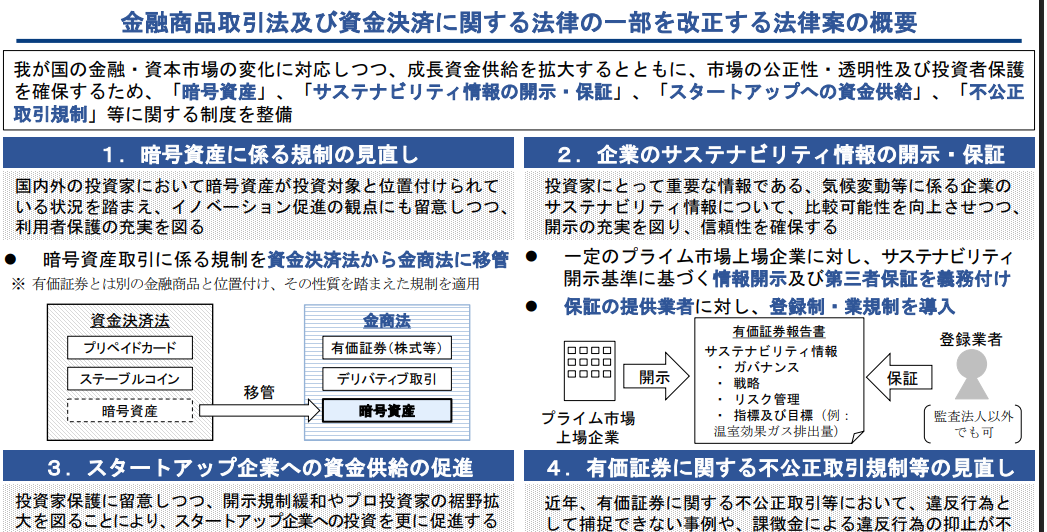
Japan has taken one of its biggest steps yet toward integrating cryptocurrency into its financial system, with lawmakers advancing legislation that could fundamentally change how digital assets are regulated and taxed. On June 11, 2026, Japan's House of Representatives approved a bill that would move cryptocurrency regulation from the country's Payment Services Act to the Financial Instruments and Exchange Act (FIEA), the legal framework that governs traditional financial products such as stocks and bonds. Although the legislation has attracted headlines worldwide, many reports have simplified what is actually a multi-stage reform process. The lower-house vote represents a significant milestone, but the proposal has not yet become law. It must still pass Japan's House of Councillors before receiving formal government approval and undergoing rulemaking by the Financial Services Agency (FSA). Current expectations are that the regulatory changes would begin taking effect next year rather than immediately.
The proposal also sits alongside another closely related reform that has received even more attention. Japan is planning to reduce the country's crypto tax burden from the current progressive rate, which can approach 55% for high-income investors, to a flat 20% tax similar to the treatment of stock investments. Importantly, that tax proposal is not included inside the FIEA legislation itself. Instead, it is part of a separate but connected policy initiative targeting implementation by 2028, assuming it successfully completes the remaining legislative process. That distinction has often been overlooked in international coverage. Japan has outlined a roadmap that combines regulatory reform with future tax modernization. Taken together, the measures represent a broader shift in how one of the world's largest economies views digital assets. For years, Japan maintained one of the toughest tax environments for cryptocurrency investors among developed nations. Now, policymakers appear focused on bringing crypto closer to the country's mainstream financial system rather than treating it as a separate asset class.
Reclassification could matter as much as the proposed tax cut
While the planned reduction in crypto taxes has generated most of the headlines, the regulatory reclassification may prove equally important over the long term. Moving cryptocurrencies under the Financial Instruments and Exchange Act changes the legal foundation governing digital assets in Japan. C would be supervised under the same framework used for securities markets. That shift creates a clearer legal basis for regulated financial products built around digital assets. One of the biggest potential outcomes is the future availability of spot cryptocurrency exchange-traded funds (ETFs) for Japanese investors. Unlike markets such as the United States, Japan has never approved regulated spot crypto ETFs. The proposed framework could eventually make those products possible once detailed regulations are completed.
READ MORE: Are Bitcoin Holders Selling for SpaceX? Onchain Data Suggests a Different Story
For investors, this could provide easier access to digital assets through traditional brokerage accounts without requiring direct ownership of cryptocurrencies. The tax proposal would also change investment incentives significantly. Today, crypto gains in Japan are treated as miscellaneous income, meaning higher earners can face combined tax rates approaching 55%. By comparison, profits from stocks are generally taxed at a flat rate of around 20%. That gap has long frustrated Japanese crypto investors. Many argued the existing system discouraged domestic investment while encouraging active traders to move funds or trading activity overseas in search of more favorable tax treatment. If the proposed tax reform reaches its 2028 target, cryptocurrencies would receive treatment much closer to other financial investments. Supporters believe that change could encourage both retail and institutional participation while making Japan a more competitive market for blockchain businesses. The reforms also arrive as Japan's broader financial sector becomes increasingly active in digital assets. Several major financial institutions have announced stablecoin initiatives, while regulators continue refining rules governing tokenized assets and blockchain-based financial services. Together, those developments suggest that Japan is preparing for a financial system where digital assets operate alongside traditional markets rather than outside them.
Why Japan's decision matters beyond its own borders
Japan's policy shift carries implications that extend well beyond its domestic market. As the world's third-largest economy, Japan has historically been viewed as one of the most conservative financial jurisdictions. When countries with that level of economic influence change direction, regulators and policymakers elsewhere often pay close attention. Japan's strategy focuses on bringing cryptocurrencies into existing financial laws while creating rules that resemble those governing traditional investments. That model reflects a broader trend emerging across major economies. However, many governments are increasingly focused on determining how they should fit into existing financial systems. The United States has followed a similar path through the approval of spot Bitcoin ETFs, evolving market structure proposals, and growing institutional participation. Europe continues implementing the Markets in Crypto-Assets (MiCA) framework. Japan's latest reforms add another major economy to that movement toward regulatory integration. The potential impact extends beyond regulation. Japan holds one of the world's largest pools of household savings. Lower taxes combined with regulated investment products could encourage more domestic capital to enter digital asset markets over time. Institutional participation may also increase as clearer legal frameworks reduce uncertainty surrounding crypto-related investment products.
None of these changes will happen overnight. The legislation still requires approval from Japan's upper house, followed by government promulgation and detailed implementation by financial regulators. Similarly, the proposed 20% tax rate remains part of a longer-term roadmap with a target implementation date of 2028. For years, Japan served as an example of how heavy taxation and restrictive policies could limit domestic crypto activity. The latest legislative progress suggests policymakers now view digital assets less as an isolated technology sector and more as an emerging part of the country's broader financial system. If the remaining legislative steps move forward as expected, Japan could become one of the largest developed markets to combine traditional financial regulation, lower crypto taxes, and regulated digital asset investment products under a unified framework. For the global crypto industry, It signals that another major economy is gradually shifting from caution toward long-term integration.
READ MORE: EU Targets Crypto in New Russia Sanctions Package, Proposes Ban on 11 Digital Asset Platforms