

Summary:
- The FBI has issued a warning about a fake token on the Tron blockchain impersonating the agency.
- The scam tells users their wallet is "under investigation" to pressure them into action.
- Victims are asked to complete a fake AML verification to avoid asset freezes.
- The goal is to collect personal and wallet-related information through phishing sites.
A new scam is making its way through the Tron ecosystem, The US Federal Bureau of Investigation has warned that scammers are distributing a fake token on the Tron blockchain that impersonates the agency. The token carries a message that looks official, using the FBI's name and visual identity to gain trust. Some users have reported receiving a notice saying their wallet is "under investigation." It's direct, serious, and designed to create panic. For many, seeing something like this tied to their wallet activity can feel urgent enough to act on immediately. According to the FBI, the message then pushes users to complete an online verification process. It's framed as a routine anti-money laundering check, but with a clear warning attached - failure to comply could lead to a total block on their assets and that's where the trap is set. The agency addressed the situation in a public advisory, making it clear that this is not a legitimate communication channel:
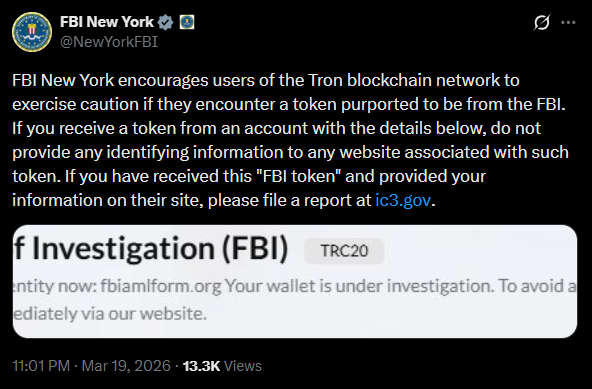
The FBI does not send tokens, nor does it contact individuals through blockchain transactions. Any message suggesting otherwise should be treated as suspicious from the start.
A Different Kind of Crypto Scam
Most crypto scams follow a familiar pattern. They promise rewards, early access, or exclusive opportunities. This one flips that idea completely. Instead of offering something, it threatens to take something away. The attackers rely on authority and urgency. By using the FBI's name, they create a sense of legitimacy. By mentioning an investigation, they introduce fear. And by setting a condition to complete verification or lose access - they push users toward a quick decision. Once a user interacts with the token or follows the instructions, they are directed to a website that appears official. There, they are asked to submit personal details or connect their wallet. In some cases, the site may request identity documents, wallet credentials, or permissions that allow transactions to be executed.
At that point, the damage is already in motion. The FBI noted that this type of messaging follows the same pattern seen in many phishing campaigns across the crypto space. The only real difference is how the message is delivered. Instead of emails or social media messages, the scam reaches users directly through their wallet activity. That makes it feel more personal and harder to ignore. It also reflects a broader shift in how scams are evolving. Attackers are no longer relying only on fake websites. They are now using blockchain-native methods to reach users where they are most active.
READ MORE: Former UK PM Boris Johnson Says Bitcoin Is a Ponzi Scheme
Why This Approach Works So Well
There's a reason scams like this continue to succeed, even among experienced users. When a message creates urgency, people tend to act first and think later. Add authority into the mix, and the effect becomes even stronger. In this case, the use of the FBI's identity adds a layer of pressure that few users would casually dismiss. For newer users, the situation can feel even more confusing. Blockchain transactions are often seen as technical or difficult to reverse. So when a message suggests that assets could be frozen, it taps into an existing fear. The Tron network itself allows tokens to be created and distributed without restriction. That flexibility is part of what makes it useful, but it also means that anyone can issue a token and attach a message to it.
This doesn't make the network unsafe by design, but it does shift responsibility toward users to verify what they're interacting with. The FBI's warning highlights this reality and also once personal information is shared, it's often difficult to undo the impact.
How to Stay Safe
Situations like this can feel convincing in the moment, but a few simple habits can make a big difference. If you receive any token or message claiming to be from a government agency, take a step back. Official organizations do not communicate through blockchain tokens or wallet notifications. Avoid clicking on links tied to unknown tokens, especially those that create urgency or demand immediate action. If a website asks for personal details or wallet access, treat that as a red flag. It's also important to double-check sources. If something feels off, look for confirmation through official channels.
However, in this case if you've already interacted with such a scam, reporting it quickly can help limit further damage. The FBI has advised affected users to file a report through the Internet Crime Complaint Center. Crypto continues to open new ways to move and manage money. But as the space grows, so do the tactics used to exploit it.
READ MORE: Trump Cyber Strategy Puts Crypto and Blockchain Security at Center of U.S. Tech Leadership