

Summary:
- SpaceX has priced its IPO at $135 per share, raising $75 billion in the largest public offering ever.
- The company will begin trading on the Nasdaq under the ticker SPCX, with a fully diluted valuation of around $1.8 trillion.
- SpaceX also holds 18,712 BTC, worth roughly $1.2 billion, giving public shareholders indirect exposure to Bitcoin.
- At the same time, Backpack is launching a tokenized version of SpaceX stock on Solana, bringing the newly listed shares onchain from day one.
- The listing could become a major milestone for both traditional finance and blockchain markets as tokenized equities continue to gain attention.
After years of speculation, SpaceX is officially entering the public markets in what has become the largest initial public offering in history. According to a filing with the U.S. Securities and Exchange Commission (SEC), the Elon Musk-led aerospace company priced its IPO at $135 per share, selling 555.6 million shares and raising approximately $75 billion. The offering comfortably surpasses Saudi Aramco's $30 billion IPO in 2019, setting a new global record for capital raised through a public listing. SpaceX is expected to begin trading on the Nasdaq under the ticker SPCX, giving retail and institutional investors their first direct opportunity to own shares in one of the world's most valuable private technology companies. Based on the offering price, the company's fully diluted valuation stands at roughly $1.8 trillion, placing it among the most valuable publicly traded companies globally from its very first day on the market. That valuation reflects investor confidence built over years of rapid expansion across multiple businesses. While SpaceX initially built its reputation through reusable rockets and commercial launches, its revenue base has broadened considerably through government contracts and its growing Starlink satellite internet network.
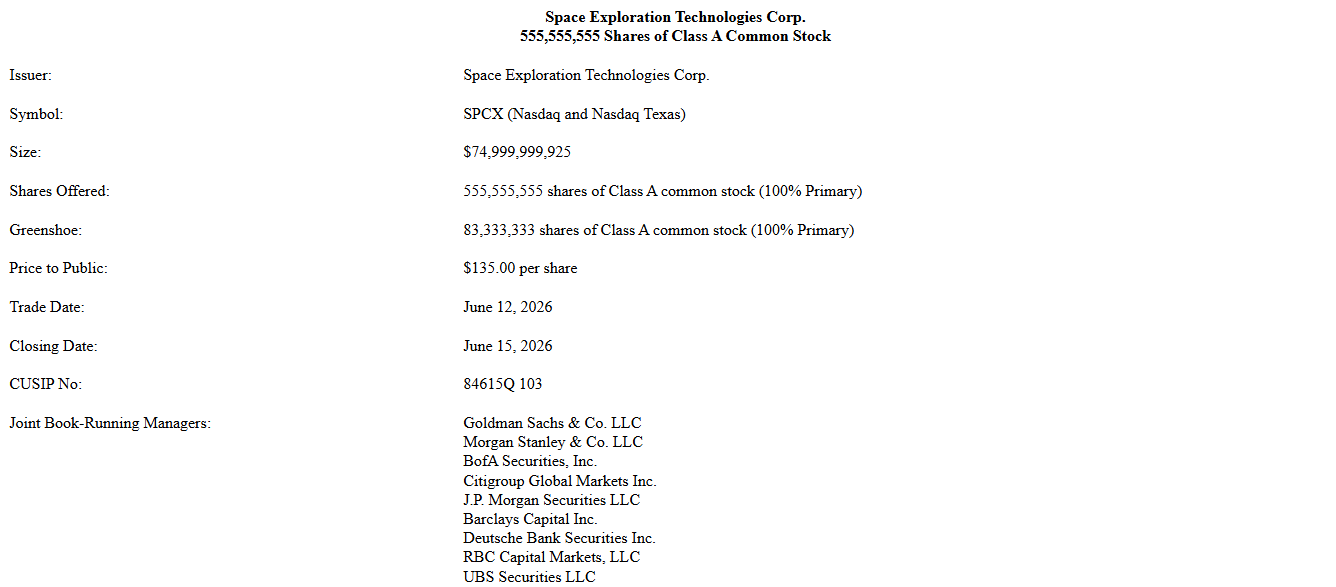
According to the filing, the company generated approximately $19 billion in revenue last year. Although that places its valuation at a relatively high multiple compared with many mature public companies, investors appear willing to pay a premium for a business that operates across launch services, satellite communications, defense contracts and future space infrastructure. The IPO has attracted enormous attention because it offers something rarely seen in public markets: access to one of the world's most closely watched private technology companies without waiting for secondary market transactions or private funding rounds. The offering also arrives during renewed investor enthusiasm for artificial intelligence, aerospace and advanced infrastructure companies, making SpaceX one of the most anticipated listings in recent years.
SpaceX's Bitcoin treasury and tokenized shares add a crypto dimension
Beyond rockets and satellites, the IPO carries another feature that has caught the attention of digital asset investors. According to the SEC filing, SpaceX held 18,712 Bitcoin as of March 31. At Bitcoin's current market price of roughly $65,000, those holdings are worth just under $1.2 billion. That means investors purchasing SpaceX shares will also gain indirect exposure to one of the largest corporate Bitcoin treasuries in the market. Corporate Bitcoin holdings have become an increasingly important theme for investors over the past several years. While companies such as Tesla have already established significant Bitcoin reserves, bringing SpaceX's holdings into public markets further expands the list of major listed firms with meaningful digital asset exposure.
The development has fueled additional discussion because Elon Musk has previously explored closer strategic ties between Tesla and SpaceX. Tesla itself continues to rank among the largest publicly traded corporate Bitcoin holders, owning more than 11,500 BTC. While Bitcoin represents only a small portion of SpaceX's overall valuation, its presence adds another layer of interest for investors who want exposure to both traditional technology businesses and digital assets within a single publicly traded company. The crypto connection extends beyond the company's treasury. Supporters argue tokenized stocks could improve global market access by allowing investors to trade around the clock, settle transactions more efficiently and eventually reduce costs associated with traditional brokerage systems. Critics, however, continue to point to regulatory uncertainty, custody requirements and questions around cross-border compliance as areas that still require greater clarity before tokenized equities become mainstream.
READ MORE: EU Targets Crypto in New Russia Sanctions Package, Proposes Ban on 11 Digital Asset Platforms
A Landmark Test For Traditional Finance and Blockchain Markets
The significance of SpaceX's IPO extends well beyond its record-breaking fundraising total. It arrives during a period when traditional financial markets and blockchain infrastructure are moving closer together through tokenized assets, real-world asset (RWA) platforms and onchain settlement systems. Large financial institutions have increasingly explored tokenization as a way to modernize securities markets, while crypto-native companies continue building infrastructure that connects blockchain networks with regulated financial products. SpaceX's public debut now sits at the center of both trends. On one side, investors are evaluating one of the world's fastest-growing aerospace and satellite companies. On the other, blockchain platforms are attempting to bring those same shares into tokenized markets almost immediately after listing. Whether tokenized equities become a widely adopted investment product remains uncertain, but SpaceX provides one of the strongest early tests yet for the concept.
The IPO also reflects growing investor appetite for companies operating at the intersection of advanced technology and infrastructure. SpaceX has expanded well beyond launch services, becoming a major player in satellite internet, government space contracts and future commercial space development. For crypto markets, the listing adds another closely watched corporate Bitcoin holder to public exchanges while demonstrating how blockchain infrastructure is beginning to interact with some of the world's largest equity offerings. As trading begins, investors will be watching several developments at once: the market's reception to a $1.8 trillion valuation, the performance of one of history's largest IPOs, the impact of SpaceX's Bitcoin treasury on investor sentiment, and whether tokenized versions of publicly listed shares can gain meaningful adoption alongside traditional stock markets. The answers may help shape the digital assets and traditional finance continue to converge over the coming years.
READ MORE: Are Bitcoin Holders Selling for SpaceX? Onchain Data Suggests a Different Story