

Summary:
- TRM Labs has identified multiple crypto scam operations exploiting excitement around the 2026 FIFA World Cup, including fake ticket websites and fixed-match betting schemes.
- Researchers linked the campaigns to four cryptocurrency wallet addresses connected to three active scam operations.
- The FBI and FIFA have separately warned fans about fraudulent websites and unofficial ticket sales ahead of the tournament.
- With an estimated 6.5 million attendees expected and a projected $40.9 billion economic impact, cybercriminals are using the event's popularity to target unsuspecting victims.
- Security experts say users should only purchase tickets through FIFA's official platform and remain cautious of crypto-based promotions tied to the tournament.
As millions of football fans prepare for the 2026 FIFA World Cup, blockchain intelligence firm TRM Labs is warning that scammers are already using the event to steal cryptocurrency through fake ticket sales, betting scams and misleading crypto promotions. According to a new report published by TRM Labs, investigators identified several active fraud campaigns that are specifically targeting World Cup fans. The company said it found two fake ticketing websites alongside a fixed-match betting operation, with the activity linked to four cryptocurrency wallet addresses. These scams encourage victims to send cryptocurrency directly, making it much harder to recover stolen funds once transactions are completed. Because blockchain transfers are generally irreversible, victims often have little recourse after sending their assets. TRM Labs summarized its findings by stating:

Beyond the confirmed scams, the report also highlights a broader trend beginning to emerge across crypto communities. Researchers are observing an increase in scam kits designed for criminals to launch fake World Cup websites, as well as unofficial meme coins attempting to capitalize on national teams, players or tournament branding. While these categories have not yet been directly tied to blockchain addresses, TRM believes they deserve close monitoring as the tournament progresses. The timing is hardly surprising. Major sporting events consistently attract fraudsters because they combine intense public interest with limited ticket availability and emotional purchasing decisions. When fans believe tickets are selling out quickly, they are often more willing to act without thoroughly verifying whether an offer is legitimate.
The 2026 FIFA World Cup officially opened on Thursday and is expected to become the largest tournament in the competition's history. FIFA estimates approximately 6.5 million spectators will attend matches across Canada, Mexico and the United States, while the tournament is projected to generate around $40.9 billion in global economic activity. That combination of massive attendance, international travel, betting interest and online ticket demand creates an ideal environment for scammers looking to exploit urgency and excitement.
READ MORE: Are Bitcoin Holders Selling for SpaceX? Onchain Data Suggests a Different Story
FIFA and FBI issue separate warnings as fake websites Spread
TRM Labs' findings come alongside separate warnings from both FIFA and the U.S. Federal Bureau of Investigation, each urging fans to remain cautious while purchasing tickets or interacting with World Cup-related websites. In May, the FBI issued a public advisory stating that cybercriminals were creating websites designed to imitate official FIFA platforms. According to the agency, these fake domains are intended to steal personal information, sell counterfeit tickets and merchandise, or facilitate other forms of online fraud. The FBI warned:
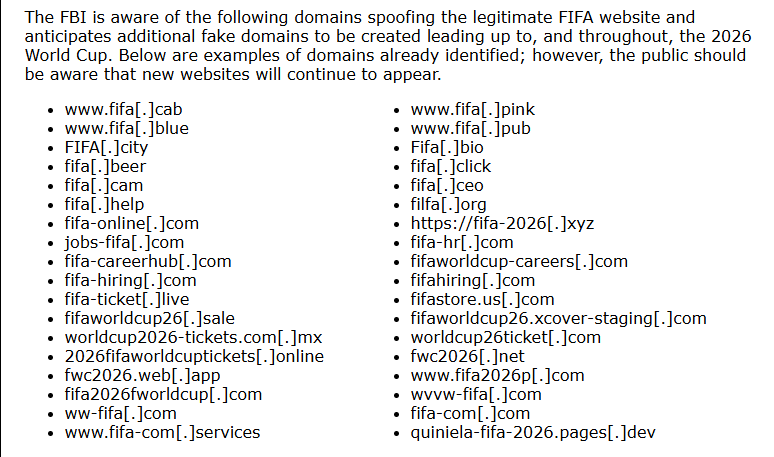
The agency expects the number of fraudulent websites to continue increasing throughout the tournament as criminals adapt their tactics to ongoing demand. FIFA has also advised supporters to avoid purchasing tickets through unofficial marketplaces or third-party resellers. According to the organization, tickets obtained outside FIFA's official sales platform carry significant risks. Fans may unknowingly purchase counterfeit tickets or tickets that are later canceled, leaving them unable to attend matches despite making payment. FIFA stated that tickets purchased through unofficial channels may be considered invalid and canceled without notice. Unlike traditional payment methods that sometimes provide chargeback protections, cryptocurrency payments usually cannot be reversed. That makes crypto an attractive payment option for scammers, especially when victims believe they are dealing with an official seller.
Major Sporting Events Remain a Growing Target For Crypto Fraud
The latest warning reflects a broader pattern that has become increasingly common across the cryptocurrency industry. Fraudsters frequently build campaigns around major global events because they naturally attract millions of online searches and first-time buyers who may be unfamiliar with legitimate purchasing channels. Large tournaments such as the FIFA World Cup create particularly attractive opportunities because demand extends well beyond match tickets. Travel packages, accommodation, hospitality services, betting opportunities and event-themed digital collectibles all become potential entry points for scammers. Crypto adds another layer to the problem. Digital assets allow payments to move quickly across borders without relying on banks, while the irreversible nature of blockchain transactions makes recovering stolen funds extremely difficult once they have been transferred. Security firms have also observed scammers increasingly combining traditional phishing techniques with cryptocurrency. Fake customer support accounts, fraudulent social media promotions, counterfeit ticket marketplaces and fixed-match betting groups often appear convincing enough to deceive even experienced users.
TRM Labs' report suggests that blockchain analytics remains an important tool for identifying and tracking these operations. By linking fraudulent campaigns to wallet addresses, investigators can better understand how funds move between scammers and potentially assist exchanges and law enforcement in monitoring suspicious activity. For football fans planning to attend the tournament, the advice from security researchers, FIFA and the FBI remains to verify websites carefully, avoid offers that seem unusually attractive, and purchase tickets only through official FIFA channels. As excitement around the 2026 World Cup continues to grow, cybersecurity experts expect scam activity to grow alongside it, making caution just as important as securing a seat for the tournament itself.
READ MORE: EU Targets Crypto in New Russia Sanctions Package, Proposes Ban on 11 Digital Asset Platforms