

TL;DR
- Ten major EU banks have formed Qivalis, a regulated entity under the Dutch Central Bank.
- Goal: launch a MiCA-compliant euro-pegged stablecoin in the second half of 2026.
- BNP Paribas joined the consortium, calling it a major moment for European digital finance.
- The push comes as the U.S. prepares its own stablecoin regulatory framework (GENIUS Act).
Europe's long-running debate around digital money just took a huge leap forward. A collective of ten major EU banks has committed to building a euro-backed stablecoin, one designed to operate fully within the region's strict regulatory framework. The initiative isn't coming from a fintech startup or a crypto-native company-it's being built by some of the continent's most established financial institutions.
The newly formed entity, Qivalis, is headquartered in Amsterdam and is now working with the Dutch Central Bank for regulatory approval. If successful, Europe could finally have a unified, compliant, bank-issued stablecoin ready for real-world payments, on-chain commerce, and cross-border transactions.
It's not just another stablecoin announcement. For the EU, this is the first coordinated effort by major banks to protect monetary sovereignty in an increasingly crypto-driven world-especially as U.S. regulation accelerates and private stablecoins dominate the global market.
The Banking Consortium Behind Qivalis
The consortium includes BNP Paribas, one of Europe's largest banking groups, along with nine other EU-based banks. Their collective aim is simple but ambitious: launch a euro-denominated stablecoin by late 2026, fully compliant with MiCA's strict rules for issuance, custody, and transparency.
In its announcement, BNP Paribas confirmed:
The timing is significant. Europe has long sought to reduce dependence on U.S. payment infrastructure, especially as the digital economy moves closer to blockchain-based settlement layers. Existing euro stablecoins exist, but none have gained meaningful traction or trust at scale-largely because most have been launched by small issuers or operate outside of strict oversight.
Qivalis changes the dynamic. This time, the anchors of the European banking system are directly involved.
Why a Euro Stablecoin Matters Now
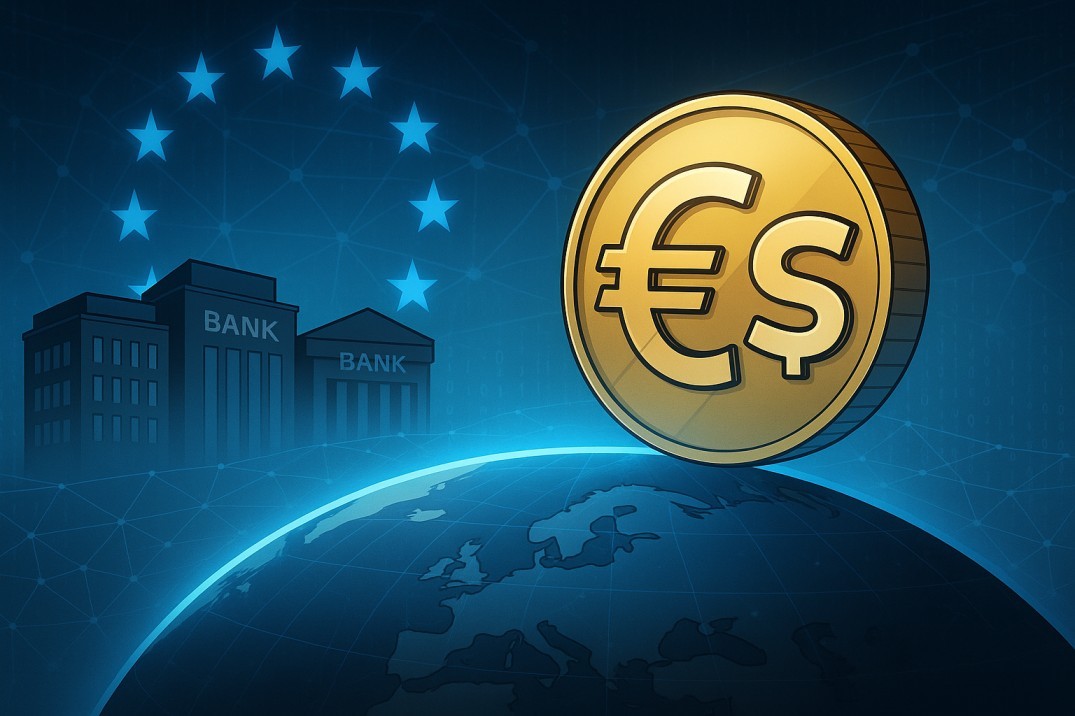
The global stablecoin landscape has been overwhelmingly dominated by U.S. dollar-based assets-USDT, USDC, PYUSD, and others. Meanwhile, euro-based stablecoins account for a tiny fraction of on-chain liquidity despite the euro being the world's second-largest reserve currency.
The banks behind Qivalis argue that Europe risks falling behind if it doesn't assert itself in the digital money race. Qivalis CEO Jan-Oliver Sell captured the sentiment clearly:
This idea of monetary autonomy is becoming more important than ever. The EU has watched the U.S. dominate crypto liquidity and Web3 financial rails. A euro-based stablecoin, issued and backed by regulated banks, gives Europe a way to build digital markets on its own terms-and in its own currency.
A MiCA-Compliant Stablecoin From Day One
One of the defining features of Qivalis is its full alignment with MiCA (Markets in Crypto-Assets), the EU's new comprehensive regulatory framework for stablecoins and crypto-related services.
MiCA introduces strict rules around:
- Reserve management
- Audits
- Transparency
- Redemption guarantees
- issuer licensing
Many private companies have struggled to adapt. Some have already left the region altogether. But Qivalis has a major advantage: its members are already deeply aligned with EU financial regulators. Their stablecoin is being built within the regulatory perimeter-not outside it-giving it a path to immediate legitimacy once approved.
This also makes Qivalis one of the first large-scale attempts to run a stablecoin fully under MiCA's framework.
The U.S. Push Forces Europe's Hand
There's another major factor behind this timing: U.S. policymakers are moving quickly. The U.S. recently passed the GENIUS Act, a bill establishing formal guidelines for payment stablecoins. This creates regulatory clarity for U.S. issuers and could help American stablecoins grow even faster.
The EU can't afford to fall behind. As the U.S. builds momentum for on-chain dollars, Europe is working to ensure the euro remains competitive as a digital settlement asset. The creation of Qivalis is partly a defensive move-and partly a structural upgrade to Europe's digital financial architecture.
What the Stablecoin Could Unlock for Europe
A bank-issued euro stablecoin could reshape how businesses, fintech companies, exchanges, and everyday consumers interact with digital finance. The benefits go beyond on-chain money-it touches the foundation of how digital payments might work in Europe.
A few concrete possibilities emerge:
- Faster cross-border payments without intermediaries
- On-chain commerce using the euro, not the dollar
- Greater stability for EU-based DeFi integrations
- Institutional adoption that requires full regulatory clarity
- A banking-grade settlement layer for digital assets
These are all areas where Europe has lagged behind. Qivalis positions the EU to build domestic infrastructure rather than relying on U.S. stablecoins.
Why This Could Become a Defining Moment for Europe
Stablecoins are becoming the backbone of global crypto markets, cross-border settlement, and real-time digital commerce. The U.S. has dominated this space with its regulatory clarity and financial appetite.
Europe needed a response. Qivalis isn't just a stablecoin project-it's the EU's first collective attempt to define its role in the next era of digital money. It aligns regulators, banks, consumers, and fintech companies around one shared infrastructure. If successful, this could become the euro's most important evolution since its launch in 1999.
Looking Ahead
The next few months will determine how ambitious this project becomes. Qivalis still needs approval from the Dutch Central Bank, needs to establish a transparent reserve structure, and must prove that a stablecoin can operate across borders while remaining fully compliant with MiCA.
But the direction is clear. Europe wants its own digital currency standard-one that reflects the euro's role in global finance without depending on American issuers or private companies. The stablecoin wars are entering a new phase. And for the first time, Europe is stepping onto the battlefield with its strongest players leading the charge.
READ MORE: Defis Privacy-crisis: How Coti Could be the answer to a $1 billion problem