

Summary:
- ZachXBT uncovered a coordinated network of fake X accounts running crypto scams.
- Accounts used viral war and geopolitical content to attract millions of views.
- AI was used to impersonate influencers and boost credibility.
- Scammers promoted fake giveaways and pump-and-dump tokens, earning six-figure profits.
- The scheme shows how social media manipulation is evolving alongside crypto fraud.
A new investigation by blockchain analyst ZachXBT reveals a different kind of crypto scam. Not one built on technical tricks or complex exploits, It's all based on attention. According to findings shared on X, a network of more than ten accounts was used to spread exaggerated and sometimes misleading posts about war and global conflicts. These posts were designed to go viral, often attracting millions of views within a short time. But once these posts gained traction, the accounts would slowly shift direction. What started as geopolitical commentary turned into crypto promotions. Fake giveaways, questionable tokens, and links that led users into scams began appearing right after engagement peaked.
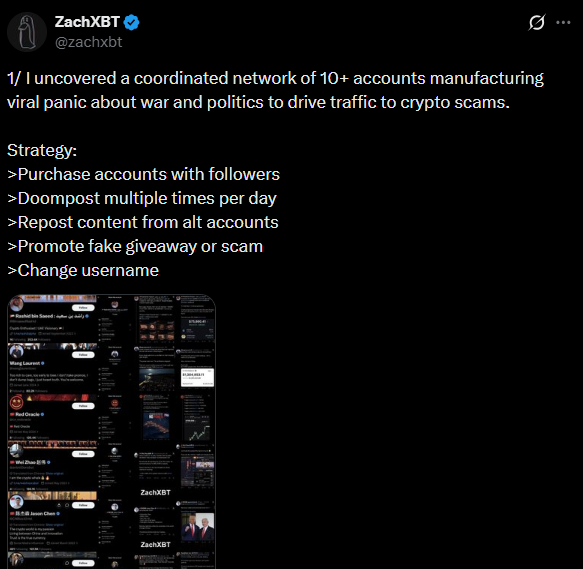
Well, The accounts themselves were not new. Many were reportedly purchased with existing follower bases, giving them an immediate level of trust and visibility. That made the content spread faster and appear more credible than a typical scam account. ZachXBT also pointed out that these accounts operate actively and they interacted with each other, replied to trending posts, and used coordinated timing to amplify reach.
AI Impersonation and Six-Figure Profits
One of the more concerning parts of the investigation is how these accounts used AI. Instead of building their own identity, the operators behind the network impersonated known figures. Influencers like Mario Nawfal were mimicked through tone, style, and sometimes visuals. The goal was simple - make the content feel familiar enough that users wouldn't question it. ZachXBT noted that the network flooded X with what he described as "doomposts." These are posts that exaggerate negative or urgent situations, often tied to war or crisis. They naturally draw attention, especially during times of uncertainty. Once users were engaged, the accounts introduced crypto-related content. This included fake giveaways and pump-and-dump schemes - setups where a token is promoted heavily to drive price up, only for insiders to sell and leave others with losses.
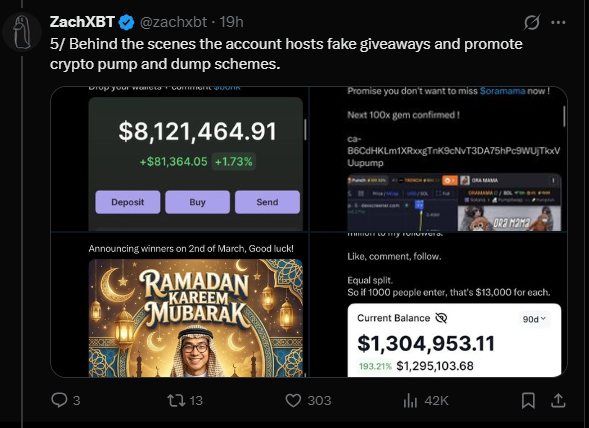
One example mentioned in the investigation is a promotion tied to a token referred to as Oramama on Feb. 22. The results were significant. "Onchain evidence suggests the scheme profited six figures," ZachXBT said, adding that the group has been farming engagement and may be preparing another scam. They are structured operations with clear planning and measurable returns.
READ MORE : MEV Bot Nets $9.9M After $50M AAVE Swap Goes Wrong, User Receives Only $36K
A Larger Problem That Isn't Going Away
This case also highlights a broader issue that platforms like X continue to face. Fake accounts and bot-driven activity are not new. But the methods are getting more refined. Instead of obvious spam, scammers now blend into real conversations, using trending topics and emotional triggers to gain visibility. War-related content is particularly effective. It spreads quickly, carries urgency, and often doesn't get questioned in the moment. That makes it an ideal entry point for scams. ZachXBT's findings suggest that even large accounts can unintentionally contribute to the problem. Some users, including those with significant followings, interacted with or amplified these posts without realizing they were part of a coordinated scheme. That kind of organic boost makes detection harder. At the same time, platforms are trying to respond.
X has introduced new measures aimed at reducing bot activity and improving transparency around AI-generated content. In a recent update, the company addressed how misleading content tied to real-world events should be handled.
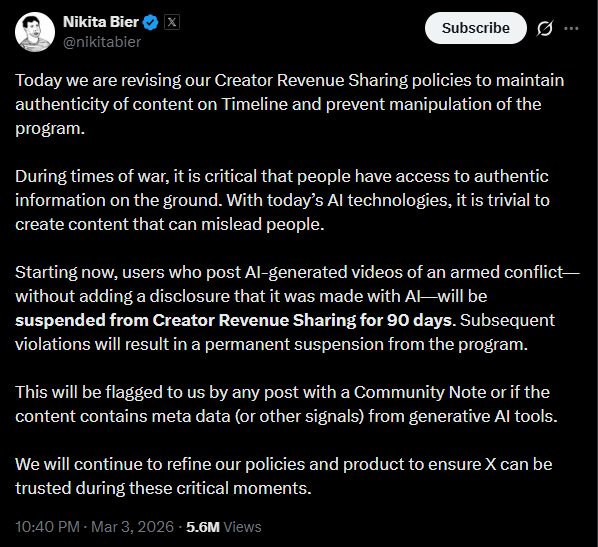
These steps show awareness of the issue. But cases like this suggest enforcement still has gaps. ZachXBT also shared a list of accounts believed to be involved in the network, noting that some may change usernames or deactivate accounts to avoid detection.
Closing Thoughts
What makes this scheme different is how it starts. There's no direct pitch at the beginning or no immediate request for funds. Just content that feels relevant, urgent, and worth sharing. Once attention is captured, everything else follows. Trust builds quickly when users believe they are engaging with real people or credible sources. And by the time the crypto promotion appears, the skepticism is already lowered. Instead of chasing users, scammers are now building environments where users come to them. That makes the line between real and fake harder to see, especially on platforms where speed matters more than verification.
ZachXBT's investigation is a reminder that crypto scams are no longer limited to niche corners of the internet. They are blending into mainstream conversations, using whatever topic is trending to stay relevant. For users, Not every viral post is what it seems. And when crypto offers appear right after high-engagement content, it's worth taking a second look.
READ MORE: SEC Drops Case Against Justin Sun After $10M Settlement, Closing Three-Year Crypto Lawsuit