

Summary:
- Base has launched Base MCP, a new tool that connects crypto wallets to AI agents.
- Users can ask AI models like ChatGPT and Claude to send crypto, swap tokens, check balances and review transaction history.
- Every transaction still requires manual approval from the user through the Base wallet.
- Base says the AI agent never gets access to private keys.
- The system also connects with apps including Uniswap, Morpho, Moonwell, Aerodrome, Avantis, Bankr and Virtuals.
- Coinbase believes the tool could help build a future "micro-payment economy" powered by AI agents.
- Researchers have also warned that AI agents should still be treated as untrusted systems due to security risks.
Base, the Ethereum layer-2 network backed by crypto exchange Coinbase, is pushing deeper into the intersection of crypto and artificial intelligence with a new product designed to let AI agents interact directly with blockchain wallets. The tool, called Base MCP (Model Context Protocol), was announced Tuesday and aims to make crypto interactions feel more conversational and less technical. Instead of manually opening apps, copying wallet addresses or navigating multiple DeFi interfaces, users can simply ask an AI assistant to perform actions from a chat window. According to Base, users can instruct AI models like OpenAI's ChatGPT or Anthropic's Claude to send funds, swap tokens, check balances, view transaction history and interact with supported crypto applications across the Base ecosystem. You talk to the AI naturally, the AI prepares the blockchain action, and then the Base wallet opens separately for confirmation. Nothing gets executed automatically without approval. That detail matters because security concerns around AI-powered crypto tools remain high. Base emphasized that AI agents never receive access to private keys or wallet custody. Instead, the system works more like an assistant preparing requests for the user to review.
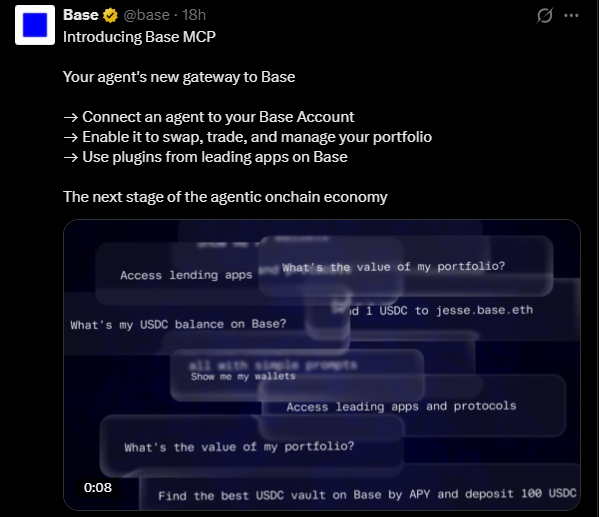
Every transaction goes through the same confirmation flow already used for standard wallet actions, including a simulation preview showing expected balance changes before approval. The crypto industry has spent years dealing with phishing attacks, malicious approvals and wallet exploits. Allowing AI systems to autonomously control funds without safeguards would almost certainly create new risks. Base is trying to make crypto interactions easier without removing the human approval layer entirely.
READ MORE: Telegram's Pavel Durov Warns Push Notifications Can Expose Private Messages
How Base MCP Works Inside the Ecosystem
Base wants AI agents to interact across an entire network of crypto applications. According to Base, MCP already supports integrations with several well-known protocols including Uniswap, Morpho, Moonwell, Aerodrome, Avantis, Bankr and Virtuals. That means an AI assistant could potentially help users move between lending protocols, decentralized exchanges, liquidity platforms and portfolio tools without manually switching interfaces. In practical terms, a user could type something like: "Swap USDC for ETH and deposit it into Morpho." The AI prepares the request, the wallet opens for approval, and the user confirms. The workflow feels closer to chatting with a financial assistant than using traditional crypto apps. That user experience shift may end up being one of the biggest themes in crypto over the next few years. Most blockchain tools still require users to understand wallet management, gas fees, token approvals and smart contract interactions. For newcomers, that learning curve can feel overwhelming. AI agents could potentially abstract much of that complexity away. Lincoln Murr, Coinbase's head of AI Product, described the idea during an interview with Fortune. He said:
That comment hints at Coinbase's broader vision. Base wants AI functionality integrated directly into mainstream crypto accounts and apps. The launch of Base MCP also ties closely to another Coinbase initiative called x402, an AI-focused payment protocol introduced in May 2025. The protocol is designed to let AI agents send and receive tiny crypto payments automatically. Coinbase believes that it could eventually create a new type of internet economy where AI systems pay each other for data, services or access in real time. Murr reportedly described MCP as a "nice wrapper" around APIs that works alongside x402 to support this idea. Right now, however, the scale remains relatively small. According to x402scan, the protocol processed around $1.13 million in volume over the past 30 days.
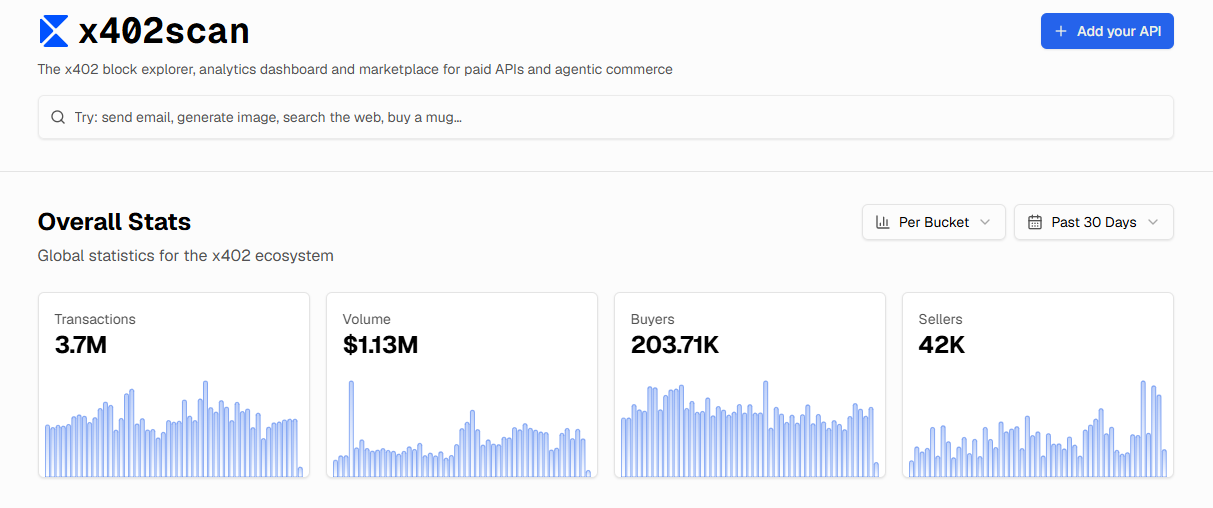
That is still tiny compared to traditional crypto payment networks. But Coinbase appears to be more interested in building infrastructure early before AI-agent commerce grows further.
The Big Opportunity - And the Bigger Security Questions
The launch arrives during a period of growing excitement around AI agents across both crypto and tech circles. Many developers believe AI assistants will eventually manage wallets, execute trades, automate research and even interact with decentralized applications on behalf of users. Some projects already market fully autonomous trading agents that operate 24/7. But security researchers remain cautious. A recent research paper involving Google and several universities warned that AI agents should still be treated as untrusted system components. AI systems can misinterpret instructions, follow malicious prompts or accidentally expose users to harmful actions if safeguards are weak.
Researchers specifically warned that AI agents must clearly separate trusted instructions from outside data to avoid manipulation attacks. In simple terms, if an attacker tricks the AI into interpreting malicious text as a legitimate command, the system could behave unpredictably. That becomes especially dangerous when financial transactions are involved. Crypto already moves at internet speed. Adding AI into the mix increases both convenience and potential attack surfaces. This is why Base's confirmation-based approach may become important. The AI can suggest actions, but users still remain the final checkpoint before funds move. That extra approval step may feel slower than fully autonomous agents, but it dramatically reduces the chances of catastrophic mistakes. The industry is shifting from simply building decentralized infrastructure toward building interfaces people can actually use comfortably. For years, crypto products were largely designed for technical users. AI changes that, Natural-language interaction could make blockchain systems feel more approachable for everyday users who do not want to memorize wallet mechanics or understand every protocol detail. At the same time, trust will remain the deciding factor. People may eventually accept AI helping manage parts of their finances. But giving autonomous systems unrestricted control over money is still a psychological and technical hurdle many users are not ready for. Base appears to introduce AI as an assistant sitting beside the user, not replacing them and for now, that may be exactly where most people are comfortable starting.
READ MORE: Iran War and AI Spending Could Push Bitcoin to $126K in 2026, Says Arthur Hayes