

Summary:
- Coinbase has launched direct Indian rupee (INR) deposits and withdrawals through India's IMPS banking network.
- Indian users can now access spot trading, perpetual futures, and Coinbase Advanced Trade using local bank transfers.
- The launch follows Coinbase's registration with India's Financial Intelligence Unit (FIU) in March 2025.
- The move marks a significant comeback after Coinbase's short-lived 2022 India launch, which was halted days after introducing UPI payments.
- India remains one of the world's most important crypto markets, ranking first in Chainalysis' 2025 Global Crypto Adoption Index.
Coinbase is making another major push into India, this time with a stronger regulatory foundation and direct banking access for local users. The US-based crypto exchange announced that Indian customers can now deposit and withdraw Indian rupees directly through the Immediate Payment Service (IMPS), one of the country's most widely used instant payment networks. The update allows users to move funds between their bank accounts and Coinbase without relying on third-party workarounds, creating a smoother path into crypto trading. According to Coinbase, Indian customers will now be able to access spot markets, perpetual futures, and the company's Advanced Trade platform through a single account while funding those activities directly with local currency. The launch represents Coinbase's most significant step in rebuilding its presence in India after a difficult entry into the market three years ago. The company highlighted its long-term involvement in India's crypto and developer ecosystem, noting:
For Indian users, instead of navigating crypto-only funding methods or peer-to-peer transfers, users can now move money directly from their bank accounts to the exchange and back again using familiar payment infrastructure. That convenience has long been one of the missing pieces preventing global exchanges from fully competing with local platforms in India.
A Second Attempt After a Difficult 2022 Launch
In 2022, the company launched support for Unified Payments Interface (UPI), India's dominant digital payments network. However, the rollout quickly ran into problems when local payments authorities distanced themselves from crypto-related transactions. Within days, Coinbase suspended the service after banking and payment partners stopped supporting UPI transactions connected to the exchange. The setback forced Coinbase to scale back its ambitions in the country and reassess its approach to regulatory compliance. Since then, India's crypto industry has evolved under increasing regulatory oversight. While the government has not banned digital assets, it has introduced strict tax policies and compliance requirements for exchanges operating in the country. A key turning point came in March 2025 when Coinbase secured registration with India's Financial Intelligence Unit (FIU). The registration placed Coinbase within India's anti-money laundering framework and provided the company with a formal regulatory pathway to offer crypto trading services in the market.
That approval appears to have paved the way for the company's latest banking integration. Unlike the earlier UPI experiment, the new rollout is built around IMPS, a banking network that has long been used for instant account-to-account transfers across India. The move gives Coinbase access to a well-established payments system while operating under a clearer regulatory structure. The company is also introducing local INR order books designed to provide deeper liquidity for Indian traders. Combined with access to Coinbase's broader global exchange infrastructure, the setup aims to offer a more seamless trading experience than what was available during its first attempt to enter the market. For Coinbase, success in India is about more than adding another country to its list of supported markets. India represents one of the largest untapped opportunities in global crypto. The country's young population, expanding internet access, strong developer community, and growing interest in digital assets make it difficult for any major exchange to ignore.
READ MORE: Fake Google Ads Targeting Uniswap Users Steal $400K, Analysts Warn
Why India Remains One of Crypto's Most Important Markets
Coinbase is entering a highly competitive landscape. Domestic exchanges such as CoinDCX, CoinSwitch, ZebPay and WazirX already serve millions of Indian users and have built strong local brands over the years. International competitors are also active. binance and kucoin remain popular among Indian traders, although many global exchanges have historically relied on peer-to-peer networks or crypto-only funding methods rather than direct banking integration. Coinbase's strategy appears focused on differentiating itself through regulated access, direct banking support, and its broader ecosystem offerings. Despite regulatory challenges, India continues to lead global crypto adoption. According to the 2025 Global Crypto Adoption Index published by chainalysis, India ranked first among more than 150 countries.
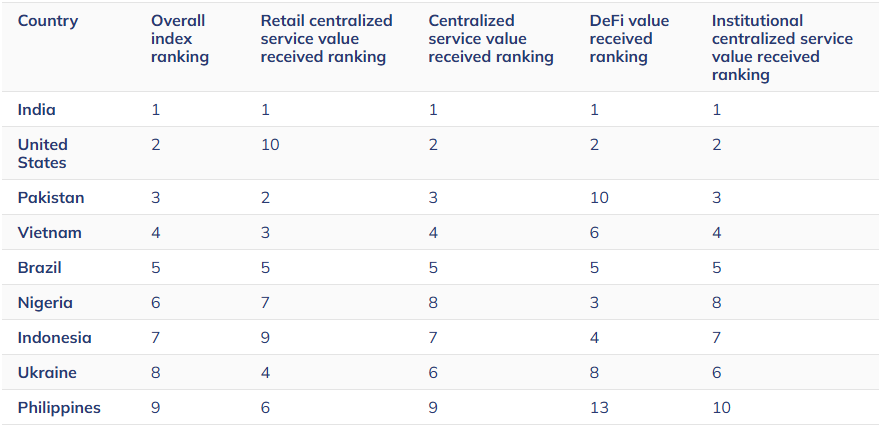
The ranking measures factors including retail participation, centralized exchange activity, decentralized finance usage, and overall transaction volume. That result highlights a reality that many global crypto companies have recognized in recent years: demand for digital assets in India remains strong despite regulatory uncertainty and taxation policies. Indian traders currently face a 30% tax on many crypto gains, along with a 1% tax deducted at source on certain transactions. Those rules have pushed some trading activity offshore and created challenges for domestic exchanges. Yet user participation remains among the highest in the world. For Coinbase, the combination of regulatory approval and direct rupee banking access creates an opportunity to compete more effectively in a market that continues to grow despite policy headwinds. The launch also reflects a broader trend across the industry. As crypto markets mature, exchanges are increasingly focusing on local payment integrations and regulatory compliance rather than relying solely on crypto-native infrastructure.
Whether Coinbase can gain meaningful market share from established domestic competitors remains to be seen. But after years of setbacks and uncertainty, the company has returned to India with a clearer regulatory position, direct access to local banking rails, and a renewed effort to serve one of the world's largest crypto user bases. For now, that may be one of the most important developments in India's crypto market this year.
READ MORE: US Seized Nearly $1 Billion in Iranian Crypto, Treasury Secretary Says