

TL;DR
- Taiwan is advancing legislation that could pave the way for its first government-approved stablecoin by late 2026, according to the FSC.
- Lawmaker Ko Ju-Chun is urging Taiwan to consider Bitcoin as part of its national reserves, proposing up to 5% of the nation's US$50B reserves in BTC.
- Regulators are assessing previously confiscated Bitcoin and studying strategic diversification.
- Taiwan's broader digital-asset stance is shifting-toward stricter regulation, careful adoption, and potential long-term crypto strategy.
Taiwan's digital-asset landscape is moving into a new phase-one that blends cautious regulation with a growing willingness to treat crypto as a strategic asset. The country is already working toward introducing its first government-approved stablecoin by 2026, and now, a national conversation is opening around whether Taiwan should also hold Bitcoin in its reserves.
This shift didn't appear suddenly. It's the result of steady regulatory development, global pressure, domestic political interest, and increasing recognition of digital assets as part of international finance. And it was pushed into wider attention once Taiwan lawmaker Ko Ju-Chun publicly advocated for Bitcoin during a national conference, arguing it could strengthen Taiwan's long-term financial resilience.
His call arrives at a time when many countries are reconsidering their monetary strategies, particularly as geopolitical tensions and currency risks grow. Taiwan's policymakers appear to understand that the world is gradually moving into a hybrid system-where traditional reserve assets like gold sit alongside digital ones like Bitcoin.
New Legislation Paves the Way for a 2026 Taiwanese Stablecoin
Before talking about Bitcoin reserves, Taiwan is first preparing the foundation for its own stablecoin. The timeline is clearer than ever thanks to comments from Financial Supervisory Commission (FSC) Chair Peng Jin-lon, speaking at a national event earlier this week.
According to Focus Taiwan, Peng explained that the stablecoin could realistically reach the market in the second half of 2026, depending on how quickly the necessary bill-the Virtual Assets Service Act-moves through the legislature. Peng elaborated on the steps required:
He added that once the FSC finalizes subordinate regulations, there will still be an additional six-month buffer before the law takes effect. That buffer makes a late-2026 release the earliest feasible target. Taiwan's regulatory history explains the careful pace. Last year, policymakers began enforcing stricter anti-money-laundering standards after compliance issues involving local exchanges MaiCoin and BitoPro. Despite this, none of the regulated Taiwanese entities have yet launched a stablecoin pegged to either the Taiwan Dollar or the U.S. Dollar.
Peng also said that although the draft legislation is influenced by the EU's MiCA framework, it doesn't mandate that stablecoins be issued only by financial institutions. But from a risk perspective, the FSC and central bank have aligned on taking a cautious path:
If passed, this would give Taiwan one of the clearest stablecoin regulations in Asia-potentially opening the door for a fully compliant, government-approved digital currency.
Why Taiwan Is g Bitcoin as a Strategic Reserve Asset
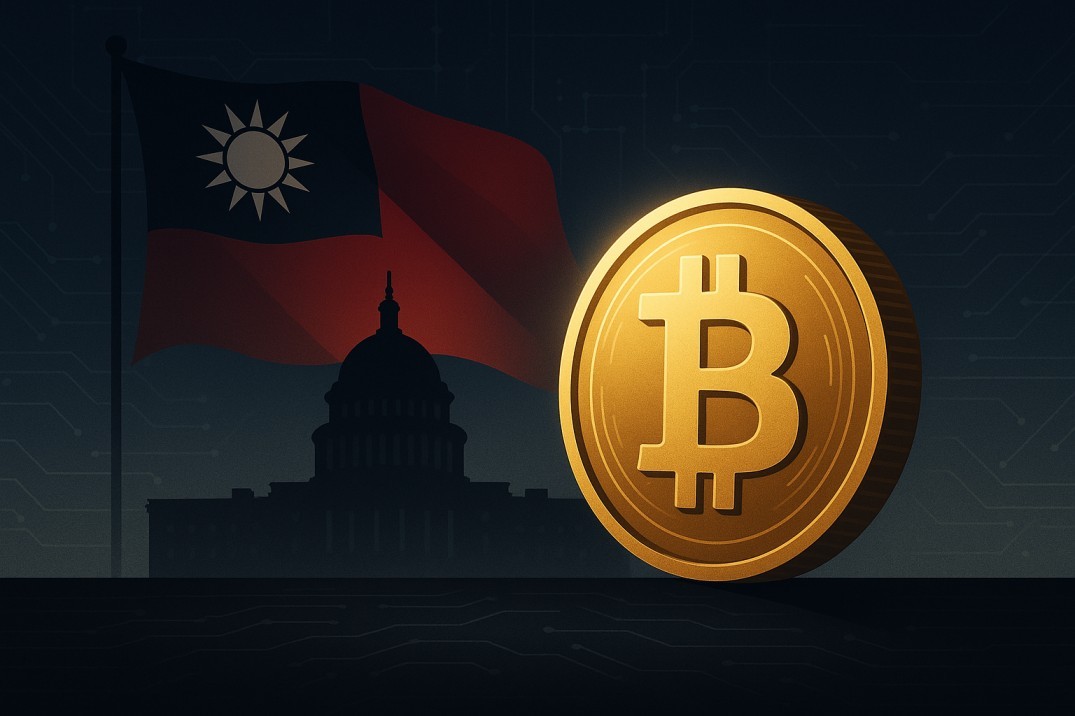
The discussion around Bitcoin reserves stems from a growing global trend: countries are increasingly evaluating digital assets as part of long-term economic resilience strategies. Taiwan may now be entering that conversation in a serious way.
Earlier this year, reports circulated that Taiwanese authorities were reviewing the total amount of confiscated Bitcoin held by the state. It signaled that officials may be preparing a framework for strategic crypto management, rather than treating seized BTC as isolated law-enforcement assets.
Then came the turning point. At a national financial conference on May 9, Legislator Ko Ju-Chun publicly pushed the idea of holding Bitcoin as part of Taiwan's diversified reserve strategy. His message emphasized global risk, currency volatility, and Bitcoin's role in modern geopolitical finance.
Ko's statement circulated widely:
The idea gained traction after additional reporting from JAN3-whose CEO Samson Mow regularly advocates for national Bitcoin adoption-confirmed that Taiwan is actively exploring this strategy.
Ko has been explicit about how far he thinks Taiwan should consider going. In a post from May 6, he wrote:
Countries like El Salvador have already taken the lead, and others-including Argentina and several Asian economies-have begun exploring similar strategies. Taiwan's version, however, would be more conservative. A 5% allocation is modest but meaningful. Even a 1% allocation would shift global attention toward Taiwan as the first major Asian democracy to openly consider Bitcoin as a reserve asset.
Why the Bitcoin Reserve Idea Is Gaining Attention Now
Taiwan's interest is not happening in a vacuum. Several factors are converging at once:
- Currency Risks Are Increasing
Between global debt levels, weakening fiat currencies, and geopolitical uncertainty, more countries are thinking about reserve diversification. - Confiscated Bitcoin Creates a Natural Starting Point
Taiwan already has BTC on government balance sheets due to law-enforcement seizures. Instead of auctioning it off, the government may be evaluating how to manage these holdings strategically. - Global Institutions and Corporations Are Buying Bitcoin
From listed companies to sovereign wealth funds, Bitcoin is slowly entering mainstream reserve allocations. Taiwan risks falling behind if it ignores these trends. - Taiwan Is Trying to Build a Modern Digital-Asset Framework
With the stablecoin legislation moving forward, reserve strategy becomes a natural next conversation. - Domestic Political Interest Is Rising
Ko Ju-Chun is giving the idea visibility-and national conversation matters in a democracy.
Looking Ahead
Taiwan's next steps will depend on how quickly lawmakers move the Virtual Assets Service Act through the legislative process. If the timeline holds, Taiwan could become one of the first Asian countries with a fully regulated, locally issued stablecoin by late 2026.
Meanwhile, the Bitcoin reserve discussion is still in its early stages, but it's gaining visibility and political momentum. Whether Taiwan adopts the idea-or moves more cautiously-the country has already placed itself in the global crypto-policy spotlight.
For now, Taiwan's digital-asset future is unfolding faster than expected. And this combination of regulatory planning, political advocacy, and strategic financial thinking could shape how the region approaches crypto in the years ahead.
READ MORE: Beyond the Hype: What’s Really Fueling Crypto and DeFi Right Now