

Summary:
- World Liberty Financial (WLFI), a DeFi platform backed by the Trump family, plans to launch a foreign exchange and remittance service called World Swap.
- The platform aims to compete with traditional FX and remittance providers by offering lower fees and simplified services.
- Global FX trading volume reached $9.6 trillion per day in 2025, while remittances totaled $892 billion in 2024.
- WLFI has faced scrutiny following reports of a $500 million UAE-linked investment ahead of Trump's inauguration.
World Liberty Financial (WLFI), a decentralized finance venture backed by the family of U.S. President Donald Trump, is preparing to expand beyond crypto into the massive foreign exchange and remittance markets. The company announced plans to roll out a new platform called World Swap, designed to offer currency exchange and cross-border money transfers with what it describes as lower fees and a more streamlined user experience. According to Reuters, the upcoming platform aims to challenge established FX and remittance providers by reducing costs and simplifying transactions for users navigating cross-border payments.
The scale of the opportunity is significant. Daily global foreign exchange trading volume surpassed $9.6 trillion in April 2025, based on data from the Bank for International Settlements (BIS). Meanwhile, the global personal remittances market reached $892 billion in annual volume in 2024, according to World Bank figures.
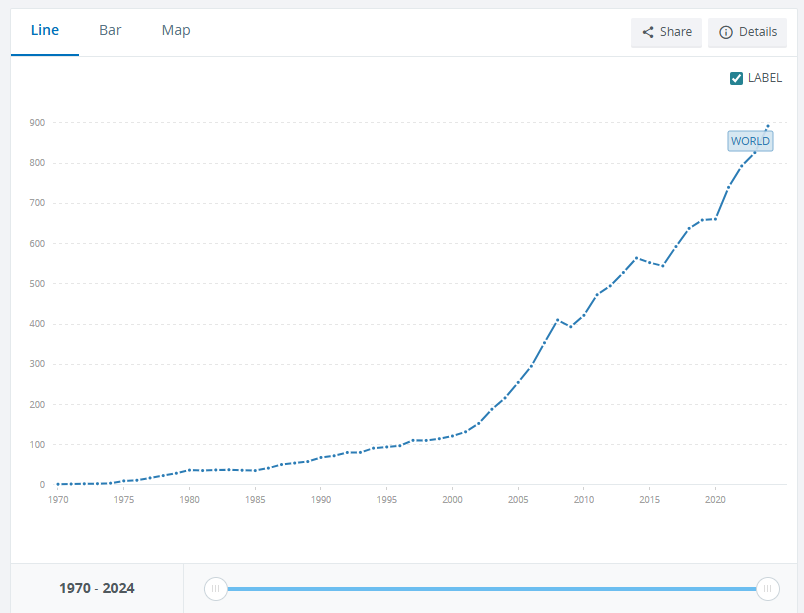
These numbers highlight why new entrants continue to eye the sector. Even capturing a small share of such flows could represent a sizable business. Speaking at the Web3 event Consensus, Zak Folkman, co-founder of World Liberty, emphasized the scale of cross-border currency movement and the fees attached to it.
While the quoted figure differs from the BIS total daily turnover, the message was clear that WLFI sees inefficiencies in the current system and believes blockchain-based infrastructure could offer a leaner alternative.
Can DeFi compete with traditional currency giants?
Foreign exchange markets are typically dominated by large banks, financial institutions and specialized remittance firms. These entities rely on long-established networks, regulatory approvals and correspondent banking relationships. Fees in the remittance sector, particularly for smaller transfers to developing countries, have often been criticized as high relative to the amounts sent. WLFI's pitch appears to rest on using blockchain rails to reduce friction. In theory, digital asset infrastructure can allow near-instant settlement, fewer intermediaries and programmable transaction logic. That could translate into lower costs, though real-world implementation depends heavily on regulatory compliance, liquidity management and user trust.
World Swap, as described, aims to simplify the user interface while offering cheaper foreign exchange and remittance services. Ease of use may be key if WLFI hopes to attract users accustomed to established platforms. For many retail users, especially migrant workers sending money home, clarity and reliability matter as much as fees. Still, the FX market is complex, it includes derivatives, forwards and swaps used by institutions to hedge risks. WLFI has not indicated that it intends to compete in the institutional derivatives space. Instead, the focus appears to be retail and cross-border money movement. The remittance market, meanwhile, has seen growing interest from crypto firms. Stablecoins pegged to major currencies are often used as settlement tools in cross-border payments. If WLFI integrates digital tokens effectively, it could bypass some traditional settlement layers. However, success will depend on regulatory acceptance in the jurisdictions it operates.
Investment and political spotlight
WLFI's expansion into FX and remittances comes as the company remains under public review following reports of significant foreign investment ties. In January, Recently,published an investment vehicle registered in the United Arab Emirates purchased a 49% stake in WLFI for $500 million, just days before President Trump's inauguration on Jan. 20, 2025. The investment vehicle, Aryam Investment 1, is backed by United Arab Emirates National Security Advisor Sheikh Tahnoon bin Zayed Al Nahyan.
That development drew attention because of the political timing and the scale of the transaction. Although WLFI operates as a private crypto venture, its connection to the Trump family places it under a brighter spotlight than many comparable startups. As WLFI enters the FX and remittance markets - both heavily regulated sectors - governance and transparency will likely remain areas of focus. Currency exchange services typically require licensing, anti-money laundering compliance and strict reporting standards across multiple jurisdictions.
The broader question is whether a DeFi-branded platform with political associations can carve out space in a market traditionally shaped by central banks, global institutions and multinational payment companies.
Conclusion
For now, WLFI is positioning World Swap as a lower-cost alternative aimed at simplifying cross-border financial activity. With trillions of dollars moving daily through the global FX system and hundreds of billions in remittances flowing each year, even modest adoption could prove meaningful. But entering these markets is one thing. Competing sustainably against established players while navigating regulatory oversight and public review will determine whether World Swap becomes a disruptive force or simply another experiment at the intersection of crypto and global finance.
READ MORE: The One Thing Ethereum Still Can't Do - That COTI Already Solved