

Summary:
- UN Wallet has officially integrated COTI’s privacy layer into its hardware wallet infrastructure
- The integration brings confidential on-chain transactions to a physical, card-based wallet
- Powered by COTI’s GC Layer and strengthened by the Helium Mainnet upgrade
- Users get hardware-enforced privacy without changing how they transact
- COTI users can access a dedicated hardware wallet and receive 30% off with a promo code
- This marks a real step toward mainstream, consumer-ready Web3 privacy
For years, self-custody has been treated as a trade-off. You either had convenience, or you had security. And privacy usually came last. Software wallets made crypto accessible, but they kept keys connected to the internet. Hardware wallets improved security, but often added friction. And privacy tools, when they existed, were usually complex, technical, or isolated from everyday use.
That gap has been obvious to anyone trying to use crypto for real activity. Like Paying someone without exposing balances, moving funds without broadcasting intent, managing assets without leaving a permanent public trail. COTI has been building toward a future where privacy works at the infrastructure level and now, with UN Wallet officially integrating COTI’s privacy layer into its hardware wallet, that vision has crossed an important line. Privacy is no longer just on-chain. It’s physical.
From Partnership to Production
COTI and United Network first partnered in October 2025. At the time, the goal was clear to bring tap-and-go, card-based hardware wallets into the COTI ecosystem. This latest update shows that the partnership wasn’t theoretical. UN Wallet has now fully integrated COTI’s privacy stack to power confidential transactions directly through its infrastructure and hardware wallet. As COTI stated:
This matters because it turns COTI’s privacy tech into something users can actually touch and use, without needing to understand cryptography or change habits. The integration also acts as a real-world demonstration of what became possible after COTI’s recent Helium Mainnet upgrade , which strengthened confidential computation at the protocol level.
What UN Wallet Actually Is (And Why It Fits)
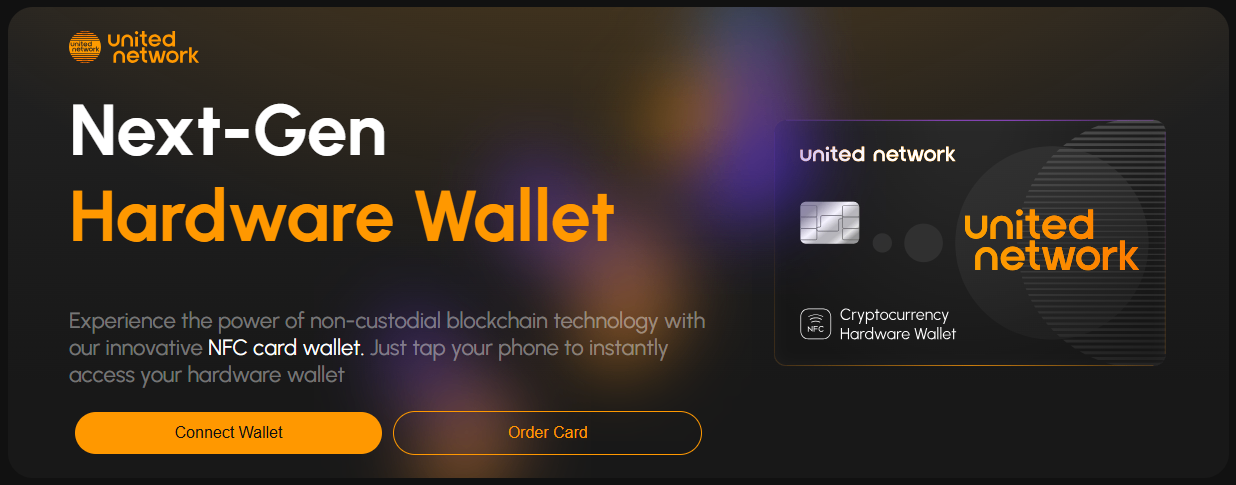
United Network isn’t a typical wallet provider. It positions itself as a Wallet-Infrastructure-as-a-Service platform, built around physical, card-based hardware wallets. Private keys are stored locally on the card. There are no server-side backups. No cloud recovery flows. No always-online signing.
According to United Network, the card is battery-free, wireless, and designed to fit inside a regular wallet, making self-custody feel closer to everyday payments than specialized hardware. As Danylo Rumiantsev, Co-Founder of United Network, previously explained:
That design philosophy makes UN Wallet a natural home for COTI’s privacy layer. Privacy that requires users to behave differently rarely scales. Privacy that fits into existing behavior does.
Where COTI’s Privacy Layer Comes In
COTI’s privacy stack is built on Garbled Circuits, a cryptographic technique that allows smart contracts to compute on encrypted data without revealing the inputs or internal logic. In practical terms, that means transactions can be validated without exposing sensitive details. Balances, amounts, and logic can stay confidential while still being verifiable.
By integrating this GC Layer directly into UN Wallet’s infrastructure, privacy doesn’t live only in software. It extends from the blockchain all the way to the physical signing device. COTI describes this as moving toward hardware-enforced privacy, where confidentiality isn’t just a toggle in an app but something physically isolated from the internet. This combination reduces attack surfaces and removes a major trust assumption: that the device handling your keys and the system processing your transactions will never leak data.
What This Means for COTI Users
For COTI users, this integration unlocks something the ecosystem hasn’t had before: a dedicated hardware card wallet designed specifically to work with COTI’s privacy features. That’s a meaningful upgrade from software wallets, especially for users managing larger balances or sensitive transactions. Private assets stay protected offline. Transactions can be executed confidentially. And the user experience remains simple.
There’s no need to learn new flows or manage complex privacy tools. The privacy is built into the system, not layered on top. This is the kind of shift that turns privacy from a feature into an expectation.
Developers Get Hardware Too
The integration isn’t only about end users. By partnering with United Network, COTI is also giving developers access to Hardware-as-a-Service. That means privacy-focused dApps can leverage UN Wallet’s card infrastructure for secure signing without building custom hardware themselves.
This opens the door to what COTI refers to as Physical DeCC, where decentralized confidential computing extends beyond software into real-world devices. LikevVoting systems, Payroll tools, Enterprise workflows. Any application where privacy matters not just on-chain, but at the point of interaction.
Developers can now design systems where sensitive actions are protected both cryptographically and physically.
Bridging Compliance and Privacy
One of the biggest barriers to institutional adoption of Web3 has always been fear of data exposure. Public blockchains don’t naturally align with how enterprises handle sensitive information. This integration directly addresses that tension. As Danylo Rumiantsev explained:
That framing matters. It’s not about avoiding regulation. It’s about meeting compliance requirements without sacrificing confidentiality. What stands out about this integration is how complete it feels. This isn’t a demo. It’s a live, consumer-ready product combining on-chain privacy with a physical form factor people already understand. United Network summed it up in its own words in medium:
That emphasis on “by default” is key. Privacy that requires opt-ins and advanced knowledge rarely becomes mainstream.
A Practical Incentive for COTI Users
COTI users also get a tangible benefit from this partnership. United Network is offering a 30% discount on its hardware wallet for the COTI community. Purchasing is straightforward:
- Visit United Network’s official store
- Use the promo code COTI30
- Receive 30% off the list price
For more details, COTI News covered the offer here: COTI x UN Wallet: The Cheapest Hardware Wallet You’ll Ever Find — Secure, Simple, and 30% Off
This isn’t just a marketing perk or something. It lowers the barrier for users to upgrade from software wallets to hardware-enforced privacy.
Closing Thoughts
Web3 has spent years promising privacy. But most solutions either lived on testnets, required technical expertise, or forced users into isolated ecosystems. This integration feels different. It takes COTI’s live, production-ready privacy layer and embeds it into a physical wallet that works like something people already use. It reduces complexity instead of adding it and it addresses both user-level security and institutional requirements in one design. After the Helium Mainnet upgrade strengthened confidential computation, the next logical step was showing how that capability translates into real products. UN Wallet provides that proof.