

Summary :
- US lawmakers released a draft bill to reshape crypto taxation rules
- Proposal suggests exempting dollar-pegged stablecoins from capital gains if price stays stable
- Small transactions under $200 may not trigger tax reporting
- Staking and lending income would still be taxed annually
- Industry leaders say clear tax rules are critical to keep innovation in the US
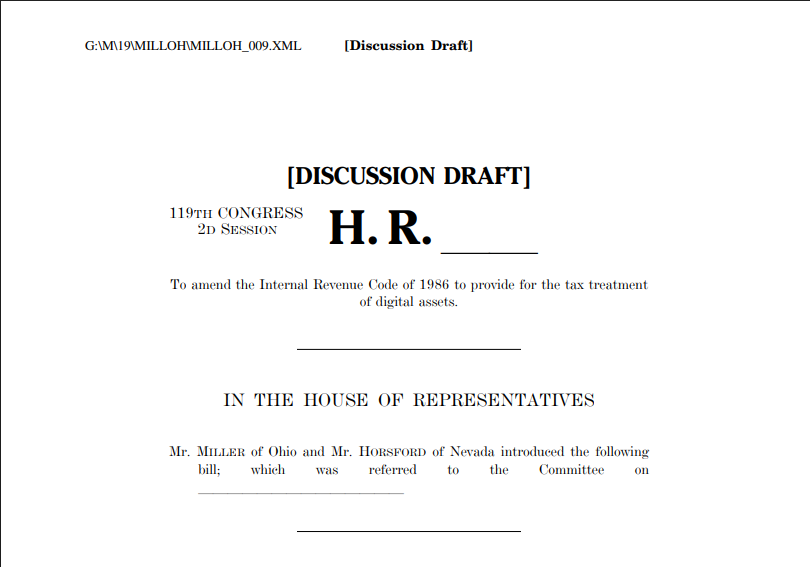
A new draft bill from US lawmakers is trying to bring long-awaited clarity to how digital assets are taxed and stablecoins are at the center of it. Representatives Max Miller and Steven Horsford have introduced a discussion draft titled the "Digital Asset Protection, Accountability, Regulation, Innovation, Taxation, and Yields Act," or simply the Digital Asset PARITY Act. While it hasn't been formally introduced in Congress yet, the proposal is already drawing attention from across the crypto space. At its core, the bill aims to update the Internal Revenue Code of 1986 to better reflect how digital assets are actually used today. Right now, even simple crypto transactions can trigger taxable events, which many argue creates unnecessary friction especially for assets designed to stay stable.
One of the most notable parts of the proposal is about dollar-pegged stablecoins. According to the draft, these assets would not be subject to capital gains or losses as long as their value stays tightly aligned with the US dollar. In simple terms, if a stablecoin remains within a 1% range of $1, users wouldn't need to worry about calculating gains or losses for everyday use. This could remove a major headache for users who rely on stablecoins for payments, transfers, or savings. Instead of tracking every minor fluctuation, the system would recognize that these assets are meant to function more like digital cash than speculative investments.
Stablecoins and Small Transactions Take Priority
The bill doesn't stop at capital gains exemptions. It also introduces a de minimis rule, which could make small crypto transactions much easier to handle from a tax perspective. Under the proposal, transactions involving stablecoins below $200 would not trigger tax or reporting requirements. That means everyday actions - like sending money to a friend or paying for a service - wouldn't come with hidden tax complexity. However, the draft leaves one detail open: the total annual cap for these tax-free transactions hasn't been finalized yet. That's something lawmakers are expected to debate as discussions move forward. At the same time, the bill draws a clear line when it comes to income generated from crypto activities. Earnings from staking, lending, or validator services would still count as taxable income.
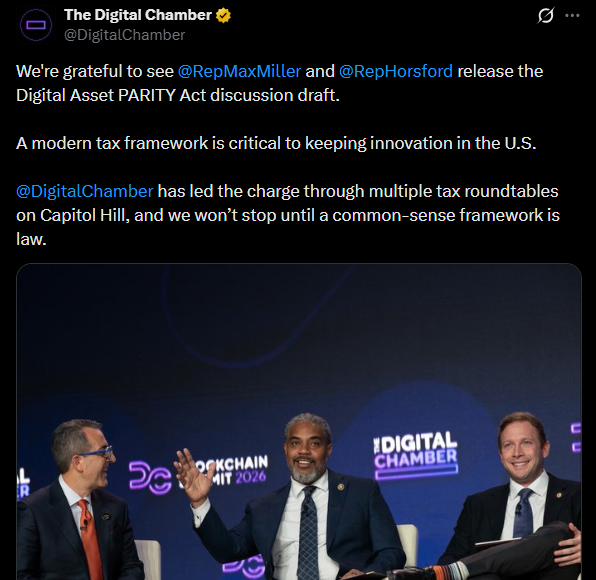
These would be calculated annually based on fair market value, meaning users would need to report them just like traditional income. This balanced approach shows that the lawmakers are trying to simplify everyday usage while still keeping revenue-generating activities within the tax system. Industry voices have been quick to respond. In a public statement, the Digital Chamber welcomed the draft, saying:
Why Tax Clarity Matters for Crypto's Future
This proposal comes at a time when the crypto industry is still dealing with unclear and sometimes inconsistent tax rules. For many users and companies, the lack of clarity has been a bigger barrier than regulation itself. Right now, even minor transactions can create reporting obligations, which discourages real-world usage. Stablecoins, in particular, are widely used for payments and cross-border transfers, so treating them like volatile assets doesn't always make sense in practice. Cody Carbone, CEO of the Digital Chamber, summed up this concern clearly:
His point reflects a broader issue that without clear rules, companies may choose to operate in other jurisdictions where regulations are easier to navigate. That could slow down innovation in the US and push development elsewhere. The draft bill also signals a shift in how lawmakers are thinking about crypto. The focus is now on to integrate them into existing systems in a practical way. By treating stablecoins more like cash and setting thresholds for small transactions, the proposal acknowledges, people actually use these assets day to day. Still, it's important to remember that this is only a discussion draft. It hasn't been introduced to Congress yet, and changes are likely as lawmakers, industry players, and regulators weigh in.
Closing Thoughts
Crypto tax reform is moving forward, and stablecoins are likely to play a key role in shaping that future. In the end, this proposal about making digital assets easier to use without adding unnecessary complexity. If it moves forward in its current form, it could remove one of the biggest friction points holding back broader adoption.