

Summary:
- The Hong Kong Monetary Authority, the Shanghai Data Bureau and the National Technology Innovation Center for Blockchain have signed an MoU to collaborate on digitizing cargo trade and finance.
- The partners will study a blockchain-based cross-border platform linking cargo trade data, electronic bills of lading and financial applications under Project Ensemble.
- The initiative will leverage the HKMA's Commercial Data Interchange and Project CargoX to streamline trade finance.
- Hong Kong is proposing tax exemptions for overseas digital assets held by investment funds and family offices.
Hong Kong and Shanghai are taking another step toward modernizing cross-border trade, with authorities from both cities agreeing to deepen cooperation on blockchain-based trade infrastructure. According to an official announcement, the Hong Kong Monetary Authority (HKMA), the Shanghai Data Bureau (SDB) and the National Technology Innovation Center for Blockchain (NTICBC) have signed a memorandum of understanding to collaborate on digitizing cargo trade and finance. At the center of the partnership is a joint research effort to examine the benefits of building a blockchain-based cross-border platform.
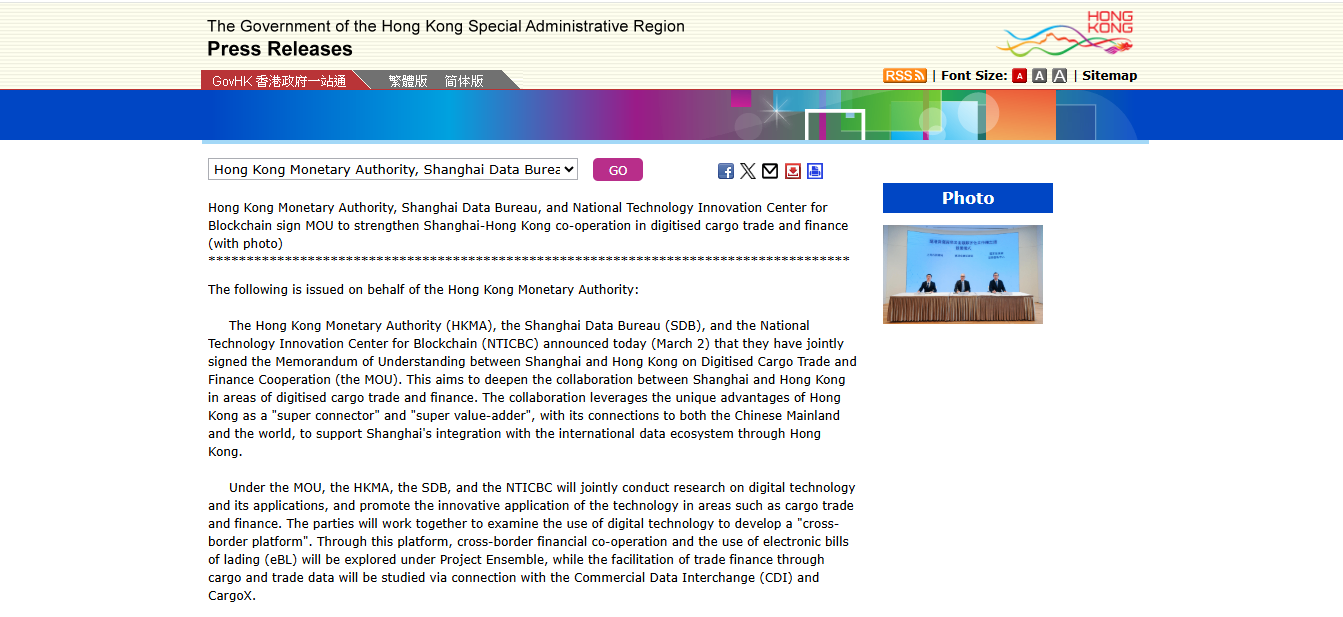
The goal is to interlink trade data, electronic bills of lading and financial services applications under the HKMA's Project Ensemble. Project Ensemble, launched in 2024, was designed to explore tokenized market infrastructure and new digital rails for financial services. It looks at how blockchain and tokenization can modernize traditional finance systems, making them faster, more transparent and easier to integrate across institutions. The new collaboration signals that trade finance - long seen as paperwork-heavy and prone to delays - is becoming a key focus area for blockchain experimentation between Hong Kong and mainland China. Trade finance often involves multiple parties: exporters, importers, shipping firms, insurers and banks. Each relies on documentation such as bills of lading, invoices and customs declarations. When these documents move across borders in paper form or fragmented digital systems, delays and verification challenges can arise.
By testing a shared blockchain-based platform, the authorities hope to create a more connected system where trade data and financial applications can interact securely and efficiently.
Commercial Data Interchange and Project CargoX at the Core
The project will build on the HKMA's existing blockchain-based financial data infrastructure known as the Commercial Data Interchange, or CDI. The HKMA launched the CDI in 2022 to enable institutional access to corporate data to streamline lending. The system allows approved institutions to access verified commercial data more directly. The result is faster credit assessments and potentially lower friction for companies seeking financing. Under the new partnership, the CDI will be used to explore how cargo and commercial data can support trade finance in a cross-border setting. By linking shipping information with financial applications, lenders could assess risks and process financing more efficiently.
CargoX, another HKMA effort built on the CDI framework. Project CargoX focuses specifically on strengthening trade data capabilities for financing and related services. Integrating CargoX insights into a cross-border blockchain platform could allow participating institutions to verify cargo documentation and funding requests in near real time. One important element of the research will be electronic bills of lading. Traditionally, a bill of lading serves as proof of shipment and ownership of goods in transit. Moving this document into a secure digital format and connecting it with financing systems that could reduce the risk of fraud and duplication while speeding up transactions.
The collaboration reflects growing confidence among regulators and data authorities that blockchain can serve practical infrastructure needs. The involvement of Shanghai partners adds further depth by combining Hong Kong's financial infrastructure expertise with Shanghai's data governance and blockchain research capabilities, the project aims to test interoperability across jurisdictions that is a crucial factor for any cross-border digital platform.
Broader Digital Asset Strategy and Tax Incentives
On Monday, Hui Ching-yu, Hong Kong's Secretary of Financial Services and the Treasury, shared a proposal to expand tax concessions for investment funds and family offices to include digital assets.
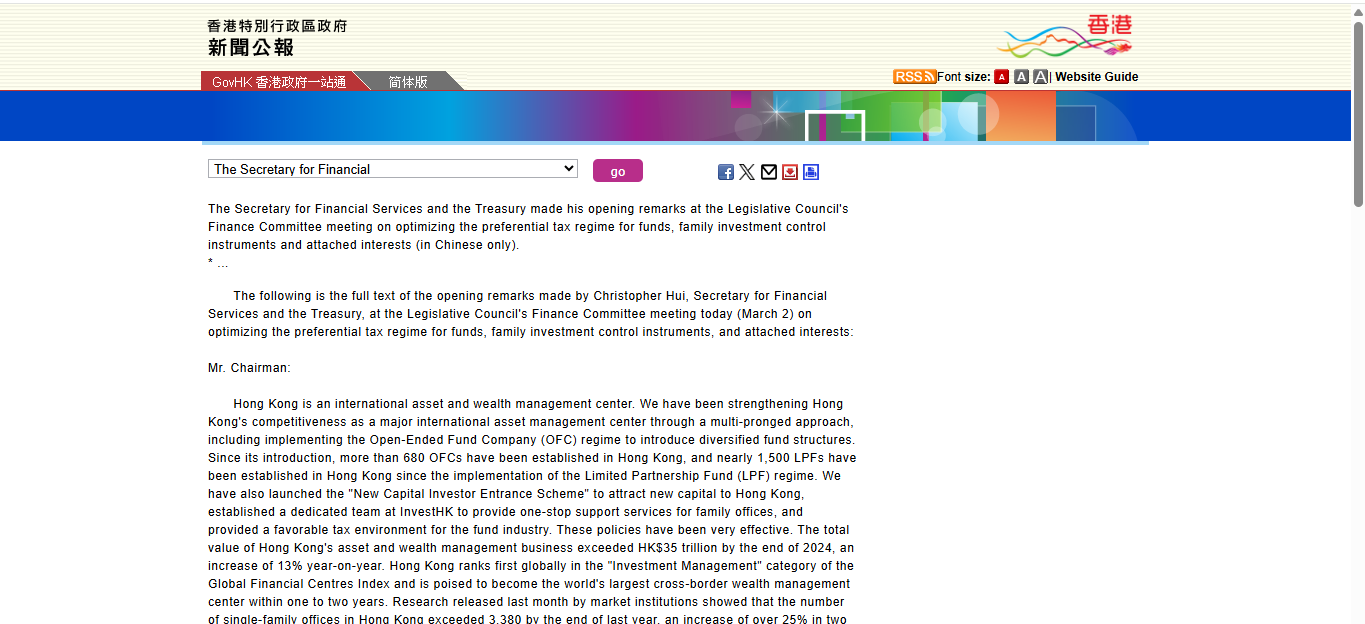
The proposals seek to add digital assets to the qualifying investments for investment funds and family offices, said the secretary during a speech at a Legislative Council Financial Affairs Committee meeting. Subject to approval, profits from digital assets held under these structures would qualify for tax exemption. Taken together, the blockchain trade finance pilot and the tax policy proposals highlight a coordinated effort to strengthen Hong Kong's position as a digital asset hub.
On one side, regulators are experimenting with blockchain infrastructure to modernize core financial services such as trade finance. On the other, policymakers are adjusting tax frameworks to attract capital and digital asset investment activity. For businesses engaged in cross-border trade between Hong Kong and mainland China, the potential benefits of a blockchain-linked platform could include faster document verification, smoother financing approval and reduced administrative overhead. Also for financial institutions, better data access and standardized digital documentation may improve risk assessment and compliance. However, significant work remains before any system moves from research to full deployment. Interoperability between institutions, legal recognition of electronic documents across jurisdictions and data privacy safeguards will all require careful design.
Closing Thoughts
Well, the memorandum of understanding authorities in Hong Kong and Shanghai are actively shaping the direction of blockchain adoption within regulated finance. As Project Ensemble evolves, the cross-border trade may become a test case for how public institutions and research centers collaborate to integrate distributed ledger technology into established financial systems. If successful, the effort could serve as a blueprint for broader regional cooperation in digital trade infrastructure.
READ MORE: BTC Surges to $68K After Iran Confirms Supreme Leader Khamenei Killed in U.S.-Israel Strikes