

Summary:
- Donald Trump announced a fresh 10% global tariff shortly after the Supreme Court of the United States struck down his earlier import taxes
- In a 6-3 ruling, the court said the president overstepped his authority by using emergency powers for tariffs during peacetime
- The decision could open the door for billions of dollars in tariff refunds to businesses and US states
- Trump criticized the ruling and plans to reimpose tariffs under alternative legal frameworks
A major legal showdown over trade policy unfolded this week after the Supreme Court of the United States ruled that Donald Trump lacked the authority to impose sweeping global tariffs using national emergency powers. In a 6-3 decision delivered on Friday, the court held that the president had overstepped his powers by emergency provisions to introduce tariffs during peacetime. The ruling marked a significant win for a coalition of US businesses and state governments that had challenged the duties introduced last year, arguing they were legally questionable and economically disruptive.
The United States Supreme Court ruled on Friday that President Donald Trump could not use national emergency powers to levy tariffs during peacetime.
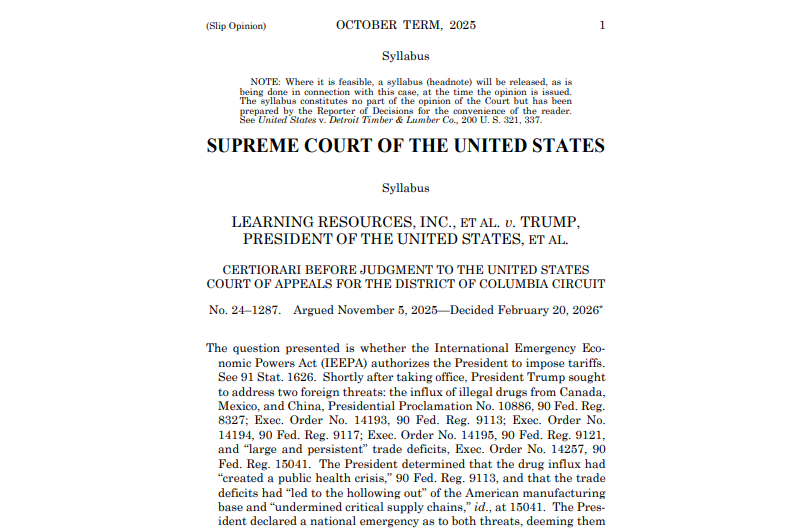
Shortly after the decision, Trump moved to introduce a replacement policy, announcing a new 10% global tariff on imported goods. The president framed the court's ruling as a setback to his broader trade agenda and criticized the judgment publicly. At the White House, Trump said he was "absolutely ashamed" of the Republican appointees on the court who voted against his trade policy. The administration had previously imposed tariffs of up to 25% on most goods entering from Canada and Mexico, alongside a 10% tariff targeting imports from China. These duties were introduced under the International Emergency Economic Powers Act (IEEPA), which allows executive action in response to national security threats. However, the court found that the circumstances cited did not meet the legal threshold for emergency intervention.
New Tariff Plan Signals Continued Trade Strategy Shift
Despite the setback, the White House appears determined to maintain its trade policy direction. Trump announced that the newly proposed 10% tariff would be introduced using different statutory routes, including the Trade Expansion Act of 1962 and the Trade Act of 1974. US President Donald Trump announced a 10% global tariff on Friday following the Supreme Court's ruling striking down his authority to levy tariffs under the International Emergency Economic Powers Act (IEEPA).
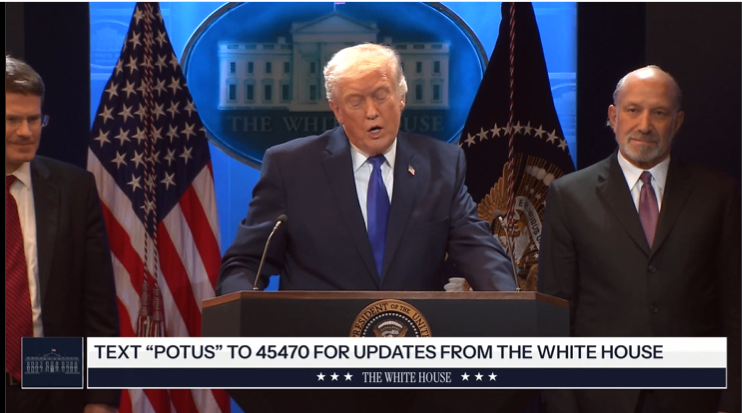
Speaking at a press conference following the ruling, Trump called the decision "ridiculous" and indicated that alternative legal mechanisms would now be used to implement similar trade protections. Trump was critical of the Supreme Court's decision, calling the decision "ridiculous" at Friday's press conference, and said that he will levy the tariffs under different legal methods, including the Trade Expansion Act of 1962 and the Trade Act of 1974.
However, the Supreme Court rejected both premises as national security threats under the IEEPA and said that the Executive Branch does not have the authority to levy tariffs under the IEEPA during peacetime. Legal experts say the outcome may reshape how future administrations approach tariff policy, particularly when linking trade measures to national security concerns. The decision also introduces new legal boundaries for executive-led economic actions during non-emergency periods.
Economic Impact and Global Trade Outlook
Beyond the legal implications, the court's decision is expected to carry financial consequences. Businesses and state authorities that previously paid tariffs under the now-invalidated measures may seek compensation, potentially amounting to billions of dollars in refunds. The ruling was a major victory for businesses and US states that had challenged the duties, opening the door to potentially billions of dollars in tariff refunds, while also injecting new uncertainty into the global trade view.
Analysts note that the immediate rollout of a revised tariff framework could temper market optimism that had followed the decision. While some companies welcomed the court's move as a step toward policy clarity, Trump's swift announcement of a new 10% global tariff signals that trade tensions may remain a key feature of the economic environment in the months ahead. But for international markets, the evolving policy landscape adds another layer of unpredictability. Importers, exporters, and manufacturers may now face renewed compliance challenges as legal frameworks surrounding tariffs continue to move.
As legal battles and policy adjustments unfold, businesses will likely keep a close watch on how trade tools are deployed under existing legislation and whether future challenges emerge in response to the administration's latest move.
READ MORE: Launch Your Idea on COTI and Earn Up to 50,000+ COTI