

Summary:
- The White House launched a new official mobile app to connect users directly with government updates.
- Users and researchers raised concerns about potential data collection and location tracking features.
- The app may collect personal data like phone numbers, emails, and IP addresses.
- Some developers claim the app could access GPS data frequently, though these claims remain unverified.
- The debate highlights growing concerns over privacy when government-backed apps request sensitive permissions.
The White House recently rolled out its official mobile application, aiming to give users a more direct connection to government updates, livestreams, and announcements. According to the official release, the app is designed to deliver real-time communication from President Donald J. Trump and his administration to the public.
On the surface, the idea is to centralize updates, make information accessible, and improve engagement. But shortly after launch, discussions started building online, especially on X, where users began questioning the data the app might be collecting in the background. While apps requesting permissions is nothing new, the situation feels different when the app is tied to a government entity. That added layer of authority tends to raise expectations around transparency and data handling.
What Data the App May Be Collecting
Based on available listings and the app's privacy policy, the application may collect certain personal data, including phone numbers, email addresses, and IP-related information. The policy also notes that some of this data, such as names and emails, is only stored if users voluntarily provide it, for example when subscribing to updates. At the same time, users pointed out that the app could request access to device-level data like location, storage, and network activity. These claims have not been independently verified, and importantly, current listings on platforms like the Google Play Store and Apple App Store do not clearly highlight all of these concerns.
Still, even the possibility has been enough to spark debate. One viral post on X captured the intensity of public reaction:
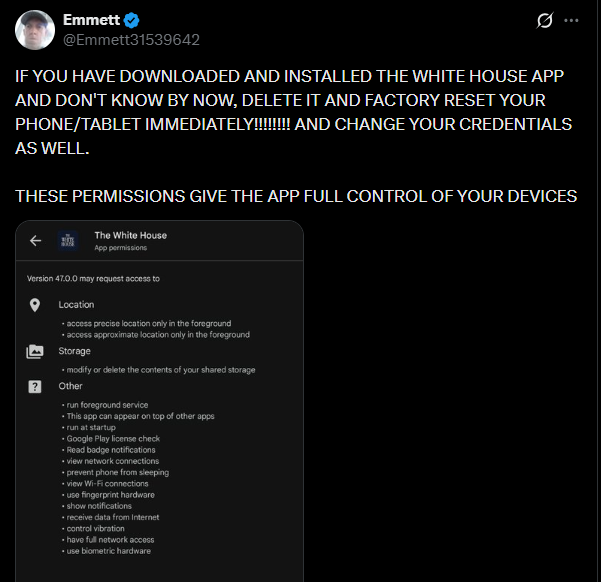
While posts like this reflect user concern, they also show how quickly speculation can spread without confirmed technical validation. That makes it important to separate verified facts from assumptions.
READ MORE: Hong Kong Retiree Loses $840K in Triple Crypto Scam After Trusting "Experts" on WhatsApp
Claims Around GPS Tracking and Developer Concerns
The conversation took a more technical turn when independent developers and security engineers began analyzing the app's potential behavior. One developer and a security engineer suggested that the app includes code capable of accessing GPS data. According to their claims, the app might be able to poll location data frequently - every few minutes - and sync it with external servers. These findings, however, have not been independently confirmed.
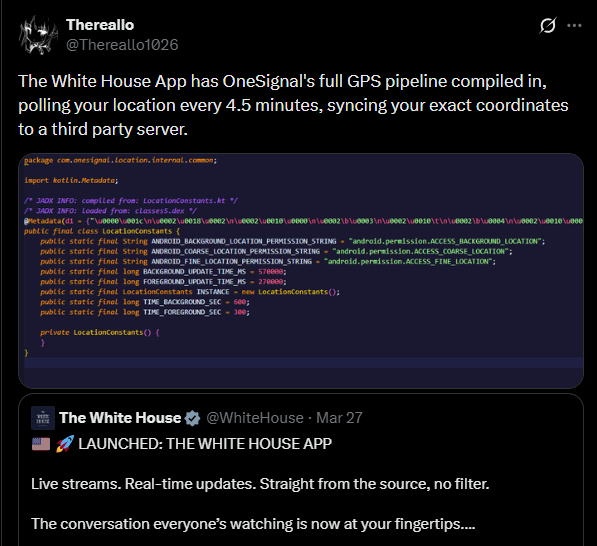
It's worth noting that many modern apps include location-related features, often for notifications, personalization, or analytics. But a government-linked app requesting or potentially accessing such data tends to attract more concern than a typical social or shopping app. And that's where the concern really sits because who operates it and how that data might be perceived or used.
Why This Debate Matters Now
This situation reflects a broader move happening across the digital world. People are becoming more aware of how their data is collected, stored, and used. At the same time, trust in institutions both private and public - is being tested more than ever. When a government-backed platform enters the space with features similar to commercial apps, expectations change. Users don't just want functionality; they want clarity. Even if the app operates within standard practices, the lack of clear communication around permissions and data usage can create uncertainty and once that uncertainty spreads, it becomes difficult to control the narrative.
It also highlights how quickly social platforms can amplify concerns. A single post can shape perception before official clarification is provided. That doesn't always mean the claims are accurate, but it does show how sensitive the topic of privacy has become. Apps today often sit at the intersection of convenience and data collection. A private company collecting location data for ads is one thing. A government app potentially doing the same raises a different set of questions. That doesn't automatically imply misuse but it does increase the need for transparency.
Closing Thoughts
Before installing any app, it helps to check what permissions it asks for and whether those permissions make sense for the app's purpose. If something feels unnecessary - like location access for an app that doesn't clearly need it - it's worth taking a second look. The White House app may continue to evolve, and more clarity could emerge over time. But for now, the conversation around it shows something bigger - users are paying attention, and privacy is no longer something people overlook.
READ MORE: US Lawmakers Released Crypto Tax Proposal to Exempt Stablecoins from Capital Gains