

Summary:
- Japan is preparing a major overhaul of its crypto regulatory regime.
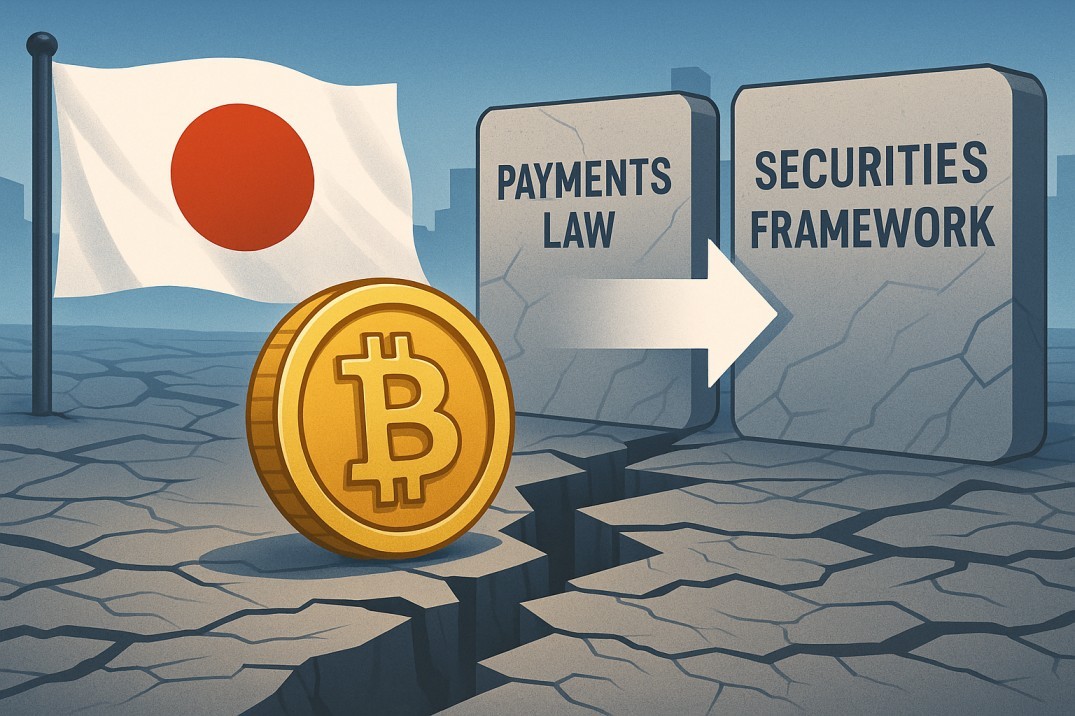
- Oversight will move from the Payment Services Act (PSA) to the Financial Instruments and Exchange Act (FIEA).
- The shift will introduce stronger disclosure requirements, especially for IEOs, and stricter actions against unregistered or overseas platforms.
- The reform comes as the government considers a flat 20% tax on crypto trading profits.
Japan, one of the earliest adopters of cryptocurrency oversight, is preparing to reshape the foundation of how digital assets are governed. In a landmark move, financial regulators have proposed shifting crypto assets out of the country's payments-focused regime and into a securities-style framework designed for investment products, trading markets, and stricter disclosures. This shift signals a profound recognition by Japanese authorities: crypto is no longer just a payment tool - it now behaves more like an investment market, with increasingly complex issuance structures, speculative activity, and global liquidity dynamics.
The proposal was unveiled when the Financial Services Agency (FSA) released a comprehensive report from its Financial System Council Working Group, examining the evolving role of crypto assets across multiple financial sectors. The document outlines a plan to move oversight from the Payment Services Act (PSA) to the Financial Instruments and Exchange Act (FIEA) - the same law that governs Japan's securities markets.
The PSA regulates payment services, money transfer tools, and digital payments - a framework crafted during the early Bitcoin era, when crypto was viewed primarily as a peer-to-peer payment technology. But the market has evolved dramatically. Now, tokens often resemble investment contracts, project shares, or digital commodities. Regulators are adjusting accordingly.
Why Japan Wants Crypto Under Securities Law
The Financial Instruments and Exchange Act is Japan's backbone for regulating securities issuance, market conduct, investor protections, and disclosure standards. Moving crypto under FIEA would place it in the same category as financial instruments traded on public markets.
The FSA's report emphasizes that
This line is one of the clearest signals yet that Japan is formalizing a global trend: acknowledging that token trading is more aligned with investment activity than payment utility.
By shifting to FIEA, Japan can impose:
- Stronger disclosure rules
- Stricter oversight during token launches
- Insider trading regulations
- Accountability for platforms operating without proper registration
This change also brings the legal framework closer to global regulatory developments, particularly the European Union's MiCA regime and South Korea's digital asset laws.
Strengthening Disclosure Rules for IEOs
One of the most impactful reforms under consideration is the tightening of disclosure rules for Initial Exchange Offerings (IEOs). IEOs - token sales conducted through crypto exchanges - have grown in popularity as a supposedly safer alternative to ICOs, but they still carry substantial information asymmetry and project-quality risks.
The FSA states that ensuring timely, accurate, and standardized disclosures is essential. The document highlights the importance of reliable information during IEO sales, especially when investors rely solely on exchange-curated listings.
With crypto moving under FIEA, issuers participating in IEOs may be required to prepare documents similar to securities filings, including:
- Financial statements
- Business plans
- Risk disclosures
- Token distribution details
- Governance structures
This marks a significant elevation in transparency obligations for token issuers, aiming to prevent misleading promotions and under-researched projects from reaching Japanese investors.
A Crackdown on Unregistered and Overseas Platforms
The FSA's proposal also introduces more explicit enforcement powers against unregistered crypto platforms, especially those operating offshore or through decentralized structures.
Under FIEA, regulators will be able to:
- Investigate platforms offering services to Japanese users without approval
- Impose penalties
- Block access or issue cease-and-desist orders
- Expand oversight over intermediaries connecting Japanese investors to foreign markets
The report also outlines explicit prohibitions on insider trading, mirroring the enforcement posture seen in MiCA and South Korea's Virtual Asset User Protection Act. Japan aims to eliminate the regulatory blind spots that previously allowed platforms to target local users without proper supervision.
Why This Matters for the Future of Japan's Crypto Market
The shift from payments regulation to securities-style oversight represents more than a technical legal update - it is a recognition of how deeply crypto has integrated into the investment ecosystem.
For exchanges, the change means higher compliance obligations, stricter operational standards, and more comprehensive disclosure reviews for new listings.
For issuers, the requirements may resemble the early stages of going public.
For investors, the new rules offer stronger protections, clearer information, and reduced exposure to deceptive marketing or poorly vetted IEOs.
Japan has long been regarded as one of the most forward-thinking crypto jurisdictions, especially after its early post-Mt. Gox reforms set global standards for asset custody and exchange licensing. Today's shift continues that legacy, aiming to cultivate a safer but innovation-friendly crypto environment.
Closing Thoughts
Japan's decision to move crypto regulation under the Financial Instruments and Exchange Act marks one of the most significant structural changes to its digital asset oversight since the early 2010s. It reflects the reality that crypto has grown far beyond its origins as a payments technology and now plays an important role in global investment markets.
Stricter disclosures, stronger investor protections, actions against unregistered platforms, and the introduction of insider-trading rules all point toward a more mature and accountable market. Combined with the potential introduction of a flat 20% tax rate, Japan may be positioning itself as one of the world's most stable, predictable, and institution-ready crypto jurisdictions.
The reform marks a turning point - a signal that Japan sees digital assets not only as financial innovation but as a core component of its future markets.
READ MORE: Beyond the Hype: What’s Really Fueling Crypto and DeFi Right Now