

Summary:
- Coinbase CEO Brian Armstrong has endorsed the CLARITY Act after previously withdrawing support earlier this year.
- Armstrong backed recent calls from U.S. Treasury Secretary Scott Bessent urging Congress to move the bill forward.
- Coinbase had opposed prior drafts, arguing they were worse than the regulatory status quo.
- The bill remains delayed in the Senate amid disputes over stablecoin rules, tokenized equities, and crypto market oversight.
- Coinbase's shift suggests negotiations may have moved closer to a compromise between lawmakers, banks, and the crypto industry.
Coinbase CEO Brian Armstrong has publicly thrown his support behind the Digital Asset Market CLARITY Act, marking a notable move after months of criticism from the company over earlier drafts of the bill. In a post on X Thursday, Armstrong backed the U.S. Treasury Secretary Scott Bessent's recent call for Congress to move the legislation forward, signaling that Coinbase now believes negotiations have produced a more workable version of the proposal.

The endorsement is a sharp reversal from Coinbase's position in January, when Armstrong said the company could not support the bill "as written" and argued the draft at the time would leave the industry worse off than having no legislation at all.
That criticism helped stall momentum in Washington, with lawmakers delaying a key Senate Banking Committee markup shortly after Coinbase withdrew support. The company's latest backing suggests many of its concerns may now have been addressed in behind-the-scenes negotiations.
Why the CLARITY Act Matters for Crypto
The CLARITY Act is one of the most closely watched crypto bills in the United States because it aims to create a formal regulatory framework for digital assets and define which agencies oversee different parts of the market. At its core, the legislation seeks to settle long-running disputes over whether certain digital assets should be treated as securities or commodities - a question that has shaped enforcement actions against many crypto firms over the past several years. For exchanges like Coinbase, that distinction matters deeply. A clearer framework could reduce regulatory uncertainty, give exchanges firmer operating guidelines, and provide legal footing for broader institutional participation in U.S. crypto markets.
Treasury Secretary Scott Bessent argued this week that the lack of clear digital asset rules has pushed innovation overseas and that Congress should move quickly to prevent the U.S. from falling further behind in crypto infrastructure and financial technology. Still, while the broad framework has support from many in the industry, the finer details remain contentious.
READ MORE: Coinbase Faces Backlash Over Prediction Market Notifications Amid Gambling Concerns
What Delayed the Bill - And What Comes Next
Though Armstrong now supports the current draft, the path to this point was far from smooth. Negotiations around the CLARITY Act reportedly became bogged down over several disputed provisions, including restrictions tied to stablecoin yield products, treatment of tokenized equities, and how authority should be divided between the Securities and Exchange Commission and Commodity Futures Trading Commission.
Stablecoin yield rules appear to have been one of the biggest sticking points. Banking groups have pushed for tighter restrictions, arguing crypto firms should not be allowed to offer yield-like incentives on stablecoin balances in ways that compete with traditional bank deposits. Crypto companies, meanwhile, have argued such restrictions would limit legitimate onchain financial use cases.
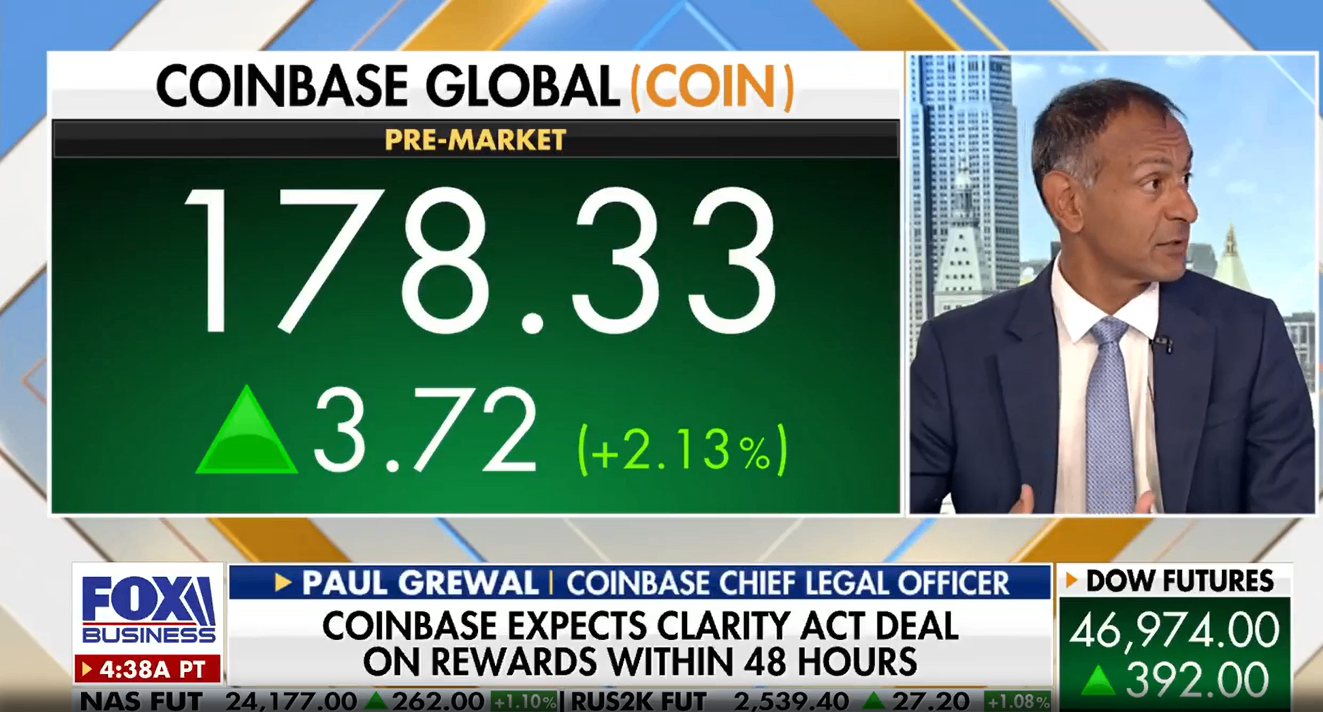
Coinbase Chief Legal Officer Paul Grewal said last week that lawmakers were "very close to a deal," suggesting compromise language may now be near completion. The Senate Agriculture Committee has already approved its portion of the bill, but the Senate Banking Committee must still complete its own markup before the legislation can move to a full Senate vote. As of Friday, no markup date had been formally scheduled. The broader political environment may also be helping the bill regain momentum. Under the Trump administration, several crypto firms have secured more favorable treatment from federal regulators, including trust charter approvals and expanded banking permissions. Coinbase itself recently received approval for a national bank trust charter, a step that could strengthen its long-term positioning in U.S. financial services.
Final Thoughts
Coinbase's reversal on the CLARITY Act indicates that crypto's largest U.S. exchange believes Washington may finally be approaching a workable regulatory framework. However, that does not mean every issue is settled. The bill still faces committee hurdles, political negotiation, and likely further amendments before any final vote. But Armstrong's endorsement removes a major source of resistance and gives lawmakers a stronger signal that the industry may now be prepared to rally behind the legislation.